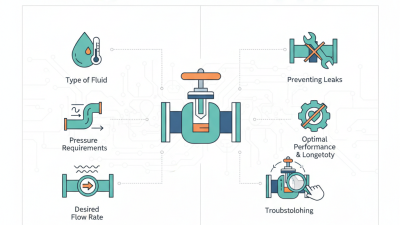
7 Tips for Choosing the Right Recirculation Valve?

Choosing the right recirculation valve can protect equipment, stabilize process conditions, and reduce avoidable operating costs. Yet the best choice is rarely based on size alone. Pump type, fluid properties, pressure changes, temperature, and minimum-flow requirements must work together.

In practical pump rooms, small details often reveal major risks. A valve may appear suitable on a specification sheet, but respond poorly during rapid load changes. A noisy bypass line, rising discharge temperature, or repeated seal damage deserves careful attention. Engineers should confirm the pump’s minimum continuous stable flow and compare it with the valve’s actual control range. This step prevents assumptions from replacing evidence.

Material compatibility matters when the fluid contains solids, chemicals, or high concentrations of dissolved gas. Body construction, trim design, actuator response, and connection standards should match the service environment. Independent test data, manufacturer documentation, and qualified engineering review can improve confidence. However, no catalogue can predict every installation problem. Field conditions are often less tidy than drawings suggest.

A reliable selection process also considers maintenance access, fail-safe behavior, noise, energy loss, and future operating changes. Operators should be able to inspect the valve without dismantling half the system. That sounds obvious. It is not always achieved.

These seven practical tips provide a clearer path toward selecting a recirculation valve that performs consistently. They also encourage a necessary pause: is the proposed valve solving the real process problem, or only treating its most visible symptom?
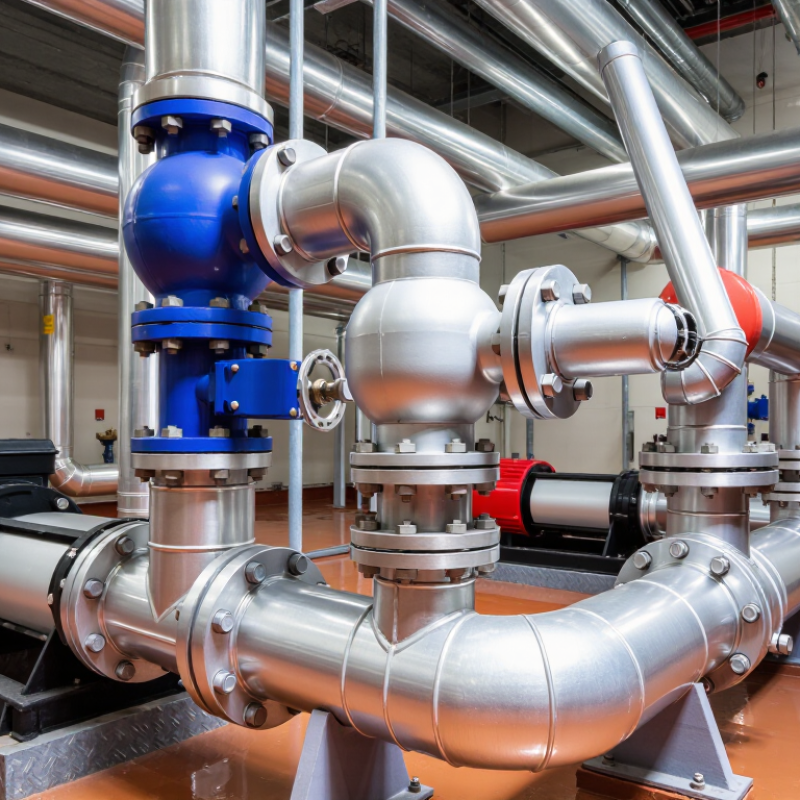
7 Tips for Choosing the Right Recirculation Valve?

Understanding Recirculation Valves and Their Role

7 Tips for Choosing the Right Recirculation Valve?

Understanding Recirculation Valves and Their Role

A recirculation valve protects a pump when process demand falls below its safe flow rate. It automatically redirects excess liquid back to the suction vessel or another suitable point. In practice, this prevents overheating, vibration, cavitation, and unstable pump operation. The valve must match the pump’s minimum continuous flow, not only its normal capacity. Small details matter.

Start by checking seven conditions: flow range, pressure, temperature, fluid properties, response speed, connection size, and maintenance access. A valve handling hot condensate needs different materials than one handling abrasive slurry. Review the full pressure drop across the system. An undersized valve may remain noisy and fail to protect the pump. An oversized valve can react poorly at low flow. Neither choice is harmless.

Field experience shows that installation location often affects performance as much as valve selection. Keep the return line short where possible, avoid unnecessary elbows, and confirm the discharge point can accept recirculated flow. Ask for test data, material certificates, and clear operating limits from qualified suppliers. Then compare those details with the pump curve and site conditions. I have seen technically correct valves perform badly because the return path was ignored. That mistake is easy to repeat. Reliable selection also requires planned inspection, since wear, blocked sensing lines, and changing process conditions can alter valve response over time.

Assessing Flow, Pressure, Temperature, and Fluid Requirements

Selecting the right recirculation valve begins with the actual operating conditions, not the pipe size alone. Measure normal, minimum, and peak flow rates before comparing valve capacities. A valve that is too small may starve the pump. An oversized valve can hunt, waste energy, and control poorly.

Pressure deserves equal attention. Record suction pressure, discharge pressure, and the expected pressure drop across the valve. Check the pump’s minimum-flow requirement under every operating scenario. Temperature also changes valve performance, seal life, and material strength. Include startup, shutdown, and emergency temperatures, not only the routine reading. I once selected a valve using average temperature data. That assumption was wrong.

Fluid properties often expose hidden problems. Confirm viscosity, density, vapor pressure, corrosiveness, and the presence of suspended solids. A clean liquid behaves differently from a warm, abrasive slurry. Look for cavitation risk when local pressure may fall below vapor pressure. Materials should match the fluid and the operating temperature. Control response matters too. Fast action may protect the pump, but excessive sensitivity can create unstable cycling. Review the actuator’s fail position and the available instrument air or electrical supply. Installation space, inspection access, and future maintenance also influence reliability. In practice, field measurements may be incomplete, and that uncertainty should be documented rather than ignored. Have an engineer verify the final selection against pump curves, piping calculations, and applicable safety requirements.

Selecting the Correct Valve Design and Materials

A recirculation valve should be selected from real pump behavior, not a catalog flow range. Start with the pump’s minimum continuous stable flow. Then verify shutoff head, temperature, viscosity, and pressure drop. A valve that opens too late can leave a centrifugal pump dangerously starved. Use a pressure-sensing automatic valve for changing demand. Use a fixed orifice only when conditions remain stable. Check bypass capacity at full differential pressure. Confirm the actuator’s fail position and response time. Require hydrostatic, seat-leakage, and functional test records.

Material selection deserves equal attention. Wet steam, oxygen, chlorides, and abrasive particles attack differently. Carbon steel may suit clean water, but chloride-bearing water can demand stainless steel or a corrosion-resistant overlay. Do not specify “stainless” alone. Ask for grade, heat treatment, hardness limits, and galvanic compatibility. The NACE IMPACT study estimated global corrosion costs at 2.5 trillion dollars in 2013, about 3.4% of global GDP. That supports lifecycle thinking, not automatic use of expensive alloys.

In my review, the overlooked detail is often the trim, not the body. Hard-faced trim can resist erosion, while the wrong elastomer swells in hot service. I would also challenge the data sheet. Actual fluid chemistry is frequently less stable than the design case. The U.S. Department of Energy reports that pumping systems can consume 25–50% of industrial electricity in some facilities. An undersized bypass wastes energy continuously; an oversized valve may hunt and wear. Balance protection, controllability, materials, and maintainability before approving the final design.

7 Tips for Choosing the Right Recirculation Valve? - Selecting the Correct Valve Design and Materials

Tip Selection Dimension What to Check Recommended Design or Material Consideration Practical Verification Data
1 Minimum-flow requirement Confirm the pump’s minimum continuous stable flow and the flow required to prevent overheating, internal recirculation, vibration, or cavitation. Use an automatic recirculation valve when protection must occur without relying on an operator or control signal. The bypass capacity should be sufficient to maintain the pump’s required minimum flow. Compare the valve’s certified bypass flow curve with the pump manufacturer’s minimum-flow curve at the lowest expected operating speed.
2 Pressure and temperature rating Evaluate maximum suction and discharge pressure, differential pressure, design temperature, start-up conditions, and pressure surges. Select a pressure class and temperature rating that exceed the complete operating envelope, including transient conditions. Consider a forged or cast body according to pressure, size, and applicable code requirements. Document normal and maximum values for inlet pressure, outlet pressure, differential pressure, temperature, and relief-system set pressure.
3 Valve operating principle Determine whether the system needs automatic, modulating, fixed-orifice, or externally controlled recirculation. A pressure-sensing automatic valve can open the bypass as main-line flow falls. A modulating design is better when bypass flow must vary continuously. A fixed bypass is suitable only when system conditions are stable and predictable. Check opening and closing set points, hysteresis, response time, minimum controllable flow, and whether the valve requires external power or instrumentation.
4 Fluid compatibility Review the fluid’s chemical composition, concentration, viscosity, solids content, toxicity, and tendency to crystallize or polymerize. Carbon steel may suit many non-corrosive services; stainless steel is commonly selected for improved corrosion resistance. Use corrosion-resistant trim and seals when the fluid or cleaning medium requires them. Provide fluid name, concentration, pH, viscosity, operating temperature, suspended solids, and cleaning or sterilization chemicals for materials review.
5 Cavitation, flashing, and noise control Check whether the pressure drop can cause liquid vaporization, vibration, erosion, or excessive acoustic levels. Use suitable pressure-reducing trim, staged pressure recovery, a larger bypass line, or a downstream back-pressure arrangement where required. Avoid selecting a valve solely by nominal pipe size. Calculate the pressure-drop ratio using upstream and downstream absolute pressures, then request predicted noise, velocity, and cavitation margins from the valve supplier.
6 Body, trim, and seal materials Match wetted materials to corrosion, erosion, temperature, pressure, and required service life. Common choices include carbon steel bodies for compatible services, stainless steel bodies or trim for corrosive duties, hardened trim for erosive flow, and elastomer or graphite seals selected for the actual temperature and fluid. Verify material certificates, corrosion allowance, hardness, seal temperature limits, galvanic compatibility, and any required industry or project specifications.
7 Installation, maintenance, and safety Consider flow direction, orientation, access, isolation, draining, inspection, testing, and safe depressurization. Select a configuration that permits inspection and removal without unnecessary downtime. Install strainers or filtration only when compatible with the pump system and maintain the correct bypass discharge arrangement. Confirm face-to-face dimensions, connection standard, allowable installation position, lifting requirements, spare-part availability, leak-testing method, and maintenance intervals.

Engineering note: Final valve sizing and material selection should be verified against the pump curve, piping system calculations, applicable pressure-equipment requirements, and the fluid manufacturer’s compatibility data.

Checking Compatibility, Installation, and Control Options

7 Tips for Choosing the Right Recirculation Valve

Choosing the right recirculation valve starts with the connected system, not the catalog photograph. Check the fluid, pipe size, pressure range, temperature, and flow direction. Materials must resist corrosion and avoid contaminating the process. Review seals carefully; a small mismatch can cause leakage after repeated cycling. In field inspections, I compare drawings with the installed pipework. They are not always identical. Confirm the valve’s capacity under real operating conditions, not only its maximum rating.

Fit matters.

Measure the available space before selecting the valve. Leave enough room for servicing, actuator movement, and insulation. Follow the manufacturer’s installation direction and support nearby piping properly. Poor alignment can add stress to the body and shorten service life. Check whether the valve needs a strainer, drain, bypass, or isolation points. These details are easy to overlook during a rushed installation. I have seen accessible valves fail simply because maintenance access was blocked.

Control options should match the process response and the operator’s skills. Manual control may suit stable systems, while electric or pneumatic actuation supports remote adjustment. Check signal type, fail position, response time, and available power before ordering. Confirm that the controller can read the valve’s feedback accurately. During commissioning, test startup, shutdown, alarms, and loss-of-power behavior. Record pressure and temperature readings. Then question the result if it looks unusually perfect; real systems often behave less neatly.

Evaluating Maintenance Needs, Efficiency, and Total Cost

7 Tips for Choosing the Right Recirculation Valve

A recirculation valve should be judged by its service life, not only its purchase price. Start by checking flow range, pressure drop, temperature, and fluid composition. A valve sized too large may hunt, waste energy, and suffer unstable control. A narrow operating range creates different problems. Ask for tested performance data, not just catalogue estimates. During commissioning, record inlet pressure, outlet pressure, and motor load. These measurements create a useful baseline for future maintenance.

Maintenance access strongly affects total cost. Choose a design with visible wear indicators, replaceable internal parts, and simple isolation points. Technicians should reach the valve without removing nearby piping. That small detail can reduce hours of downtime. Review seal materials carefully. Heat, suspended particles, and chemical exposure can shorten service life. Also check whether inspection requires special tools or factory service. It may look efficient on paper.

Efficiency includes more than reduced power consumption. Compare leakage rates, response speed, control accuracy, and expected repair intervals. Calculate energy costs across several operating years. Include spare parts, labor, shutdown losses, and disposal costs. A cheaper valve can become expensive after repeated seat replacement. Be realistic about operating conditions. Laboratory figures may not match a dirty, vibrating installation. That gap deserves attention. Sometimes the best choice is not the most advanced design, but the one technicians can diagnose correctly.