What Are Valve Suppliers and How Do You Choose One?
Choosing the right valve suppliers can influence plant safety, maintenance costs, and production continuity. A valve is not merely a metal component. It controls pressure, flow, temperature, and sometimes hazardous media. The wrong selection may cause leakage, vibration, premature wear, or costly shutdowns.
Greg Johnson, a veteran valve-industry specialist and founder of United Valve, offers a practical principle: “The best valve choice begins with understanding the application, not comparing prices.” This idea deserves attention. Reliable valve suppliers should ask about fluid composition, operating pressure, temperature range, connection standards, cycle frequency, and required certifications. They should also explain why a specific material or design fits the service.
Look beyond a polished website.
Strong valve suppliers provide traceable documentation, clear technical drawings, testing records, and responsive engineering support. Their experience should appear in details. Can they recommend stainless steel for corrosive service? Can they distinguish a control valve from an isolation valve? Do they understand cavitation, actuator sizing, and seat compatibility?
Price still matters. It should not lead the decision. A low-cost valve may become expensive after repeated repairs, delayed delivery, or poor technical support. Yet supplier reputation alone is not enough. Ask for references, inspect quality procedures, and review warranty terms carefully.
The process is not always perfect. Specifications may be incomplete, and supplier claims may sound similar. That is why buyers should compare evidence, not promises. This guide explains how to evaluate valve suppliers with practical questions, technical judgment, and a realistic view of long-term reliability.
What Are Valve Suppliers and What Services Do They Provide?
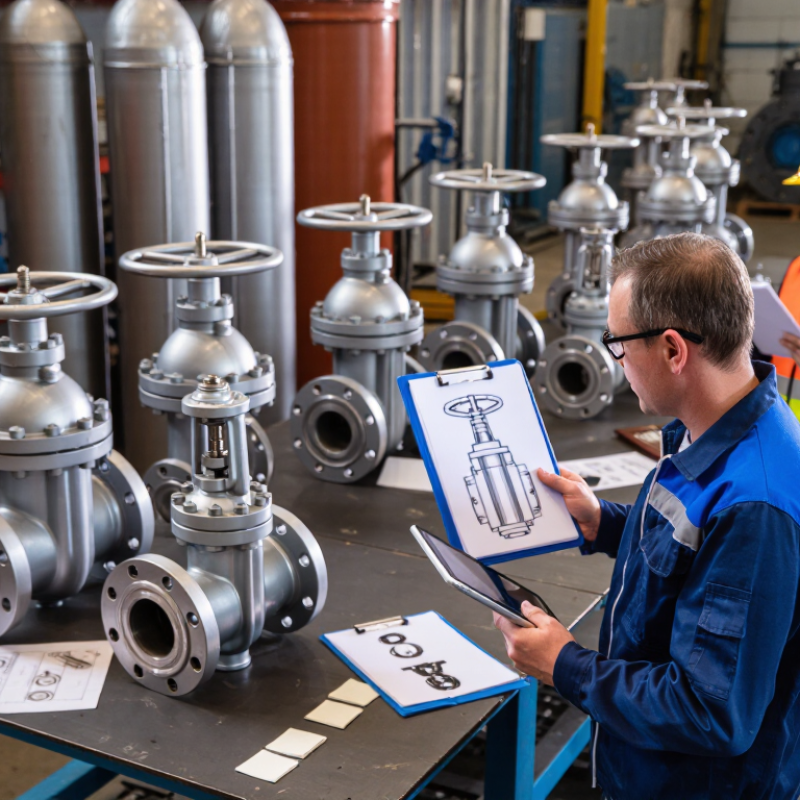
Valve suppliers do more than sell industrial valves. They connect operating requirements with suitable products, technical advice, and ongoing support. In practice, a dependable supplier asks about pressure, temperature, fluid type, flow rate, connection standards, and operating frequency. Small details matter. A valve that fits the pipe may still fail when the fluid causes corrosion or the actuator lacks enough torque. Careful suppliers review drawings, process data, and installation space before recommending a solution.
Their engineering services may include valve sizing, material selection, actuator matching, and compatibility checks. They can compare manual, pneumatic, electric, and control valve options based on actual operating conditions. Many suppliers also provide technical datasheets, inspection records, pressure-test reports, certificates, and traceability documents. Documentation matters. For safety-critical systems, suppliers may support factory acceptance tests and help coordinate independent inspections. However, these services vary widely, so buyers should confirm the exact deliverables before placing an order.
After delivery, useful suppliers may offer installation guidance, commissioning support, operator training, spare-part planning, and maintenance advice. They may also keep critical components available to reduce downtime. No selection is perfect. Field conditions change, and initial specifications can contain gaps. I have seen projects suffer because a supplier focused on price while overlooking access for future maintenance. A clear service boundary is often more valuable than a polished sales promise.
What Are Valve Suppliers and How Do You Choose One? - What Are Valve Suppliers and What Services Do They Provide?
| Evaluation Dimension | What a Valve Supplier May Provide | Information or Evidence to Request | Why It Matters When Choosing a Supplier |
|---|---|---|---|
| Supplier Role | A valve supplier may manufacture, distribute, customize, or integrate valves and related flow-control equipment. | Company capability profile, product range, manufacturing or distribution scope, and technical support coverage. | The supplier's role determines how much control it has over design, quality, lead time, and after-sales support. |
| Valve Types | Common categories include ball, gate, globe, butterfly, check, diaphragm, plug, safety, and control valves. | Product catalogue, valve construction drawings, size range, pressure class, temperature range, and connection options. | Different valve designs suit different flow, isolation, throttling, pressure, temperature, and media requirements. |
| Application Knowledge | Suppliers may serve water treatment, chemical processing, energy, oil and gas, food processing, pharmaceutical, HVAC, and general industrial applications. | Relevant application references, material recommendations, operating limits, and compatibility guidance. | A valve must be suitable for the fluid, pressure, temperature, flow conditions, and operating environment. |
| Material Selection | Available materials may include carbon steel, stainless steel, ductile iron, cast iron, alloys, engineered plastics, and elastomers. | Material certificates, wetted-part specifications, seal information, corrosion-resistance data, and media compatibility documentation. | Correct materials reduce corrosion, leakage, premature wear, contamination, and unexpected maintenance costs. |
| Engineering Support | Technical services can include valve sizing, pressure-drop review, actuator selection, control integration, and customized configuration. | Sizing calculations, datasheets, technical drawings, selection notes, and confirmation of operating conditions. | Engineering support helps prevent undersizing, oversizing, unstable control, excessive energy use, and installation problems. |
| Actuation and Automation | Suppliers may provide manual operators, pneumatic actuators, electric actuators, positioners, solenoid valves, switches, and control accessories. | Actuator torque or thrust data, fail-safe arrangement, control signal requirements, enclosure rating, and installation details. | Proper actuation ensures reliable opening, closing, modulation, emergency response, and compatibility with the control system. |
| Testing and Quality Control | Typical quality activities include dimensional inspection, pressure testing, seat-leakage testing, functional testing, and visual inspection. | Inspection and test plans, pressure-test records, leakage results, calibration records, and traceability documents. | Documented testing provides evidence that the supplied valve meets the agreed performance and safety requirements. |
| Standards and Compliance | Valves may be designed, tested, or documented according to applicable national, regional, industry, and project standards. | Applicable standard references, conformity declarations, certification documents, and project-specific compliance statements. | Compliance supports safe operation, regulatory acceptance, procurement approval, and compatibility with project specifications. |
| Documentation | A supplier may provide product datasheets, general arrangement drawings, installation instructions, operation manuals, spare-parts lists, and certificates. | A sample document package and a list of documents included with each order. | Complete documentation supports engineering review, installation, commissioning, maintenance, audits, and future replacement. |
| Customization | Customization may include special materials, non-standard dimensions, unusual connections, coatings, extended stems, custom actuators, or special testing. | Engineering-change process, customization limits, drawing-approval procedure, and estimated design lead time. | A clear customization process helps ensure the valve fits the system without creating uncontrolled technical or schedule risks. |
| Delivery Capability | Delivery services may include stock supply, scheduled production, project-based procurement, export packing, and shipment coordination. | Quoted lead time, stock status, production schedule, shipping terms, packaging details, and delivery milestones. | Reliable delivery reduces installation delays, project downtime, and the need for costly emergency purchasing. |
| After-Sales Service | Support may include installation guidance, commissioning assistance, troubleshooting, spare parts, repair, refurbishment, and maintenance advice. | Service coverage, response process, spare-parts availability, warranty terms, and technical contact arrangements. | Accessible support improves uptime and helps resolve leakage, actuator, control, and maintenance issues efficiently. |
| Total Cost of Ownership | The total cost includes purchase price, installation, actuation, energy use, inspection, maintenance, spare parts, downtime, and replacement. | Detailed quotation, maintenance recommendations, expected service conditions, spare-parts pricing, and warranty coverage. | The lowest purchase price may not provide the lowest long-term cost if reliability, efficiency, or serviceability is poor. |
| Selection Questions | Key questions include: What is the medium? What are the pressure and temperature? Is the valve for isolation or control? What are the size, connection, material, and actuation requirements? | A completed technical specification, process data sheet, piping information, and clearly defined acceptance criteria. | Accurate operating data allows suppliers to recommend a valve that is technically suitable rather than relying on price or size alone. |
Related Posts
-
Top 10 Tips for Choosing the Best Valve Suppliers for Your Projects
-

Who Are the Top Valve Suppliers in China?
-
Top 10 Apollo Ball Valves in China for Reliable Performance and Quality?
-
Top Tips for Choosing and Maintaining Your Recirculation Valve
-
Why You Should Choose Automatic Valves for Your Industrial Applications
-

Top 10 Valve Home Innovations to Watch in 2025