
What Are the Top Types of Check Valves?
Choosing a check valve is not a catalog exercise. It is a decision about fluid direction, pressure loss, closing speed, and the cost of failure. Grand View Research’s Industrial Valves Market report estimated the global market at USD 78.6 billion in 2023, reflecting the scale of equipment used across water, energy, and process industries. That figure covers industrial valves broadly, not check valves alone, but it signals why sound selection matters. A valve that slams shut can create damaging pressure surges. One that is poorly matched to flow may chatter, wear, or leak backward.
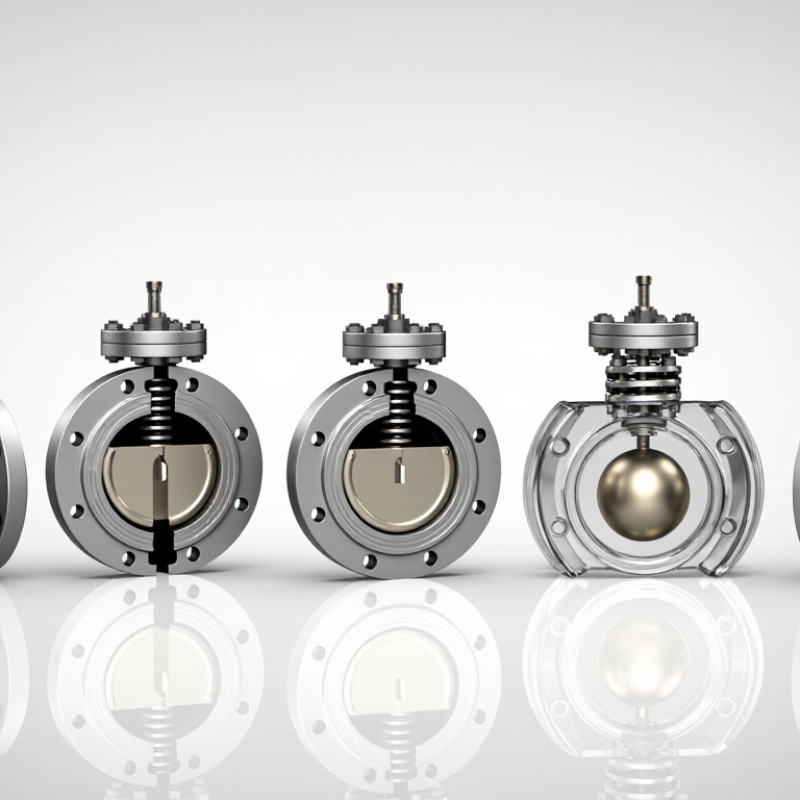
The main designs solve different problems. Swing check valves suit many larger, steady-flow lines; lift and piston types offer guided closure; dual-plate designs can reduce space and weight; and ball or diaphragm designs serve particular fluids and operating conditions. There is no universal winner. John V. Ballun, author of Valve Handbook, is a useful engineering reference for understanding how valve construction and service conditions shape selection. The practical lesson, paraphrased rather than presented as a verbatim quotation, is to match the design to the application—not simply the pipe size. Small details matter: fluid cleanliness, mounting orientation, cracking pressure, and maintenance access can change the choice. A neat specification is not enough. The following overview compares the top types of check valves, their strengths, and the trade-offs engineers should examine before installation.
How Check Valves Control Flow and Prevent Backflow
What Are the Top Types of Check Valves?
A check valve lets fluid move in one direction and closes when flow reverses. This simple action helps protect pumps, pipes, and equipment from backflow. The closing mechanism varies by design. A swing check uses a hinged disc, while a lift check moves a disc up from its seat. Dual-plate models use two spring-assisted plates. Each design responds differently to flow speed, pressure, and installation conditions.
Choosing the right type affects more than backflow control. A swing check often suits steady flow in larger pipes, but may close slowly and contribute to water hammer. Spring-assisted valves can close faster, though their opening pressure may restrict flow in some systems. Lift checks need the correct orientation and enough pressure to raise the disc. In practice, neat diagrams can hide real-world issues: a valve that works well on paper may chatter when flow is uneven. Check the system’s flow rate, pressure, fluid, and manufacturer’s installation guidance before selecting a valve.
Tips: Confirm the flow-direction arrow before installation. Keep the valve accessible for inspection, and check for debris around the seat. If pipes vibrate or the valve repeatedly knocks, review its sizing and operating conditions.
What Are the Top Types of Check Valves? How Check Valves Control Flow and Prevent Backflow
| Check Valve Type | How It Works | Flow and Closure Characteristics | Typical Installation Considerations | Common Applications |
|---|---|---|---|---|
| Swing Check Valve | A hinged disc swings open when forward pressure pushes it away from the seat. Reverse flow moves the disc back onto the seat. | Often provides relatively low flow resistance when fully open. Closure can be slower than in spring-assisted designs, so flow conditions may contribute to valve slam. | Commonly installed in horizontal lines; many designs also permit vertical installation with upward flow. Follow the valve’s flow-direction marking and installation instructions. | Water and wastewater lines, pumping systems, and larger-diameter piping where space for the disc’s movement is available. |
| Lift Check Valve | Forward pressure raises a guided disc or piston from its seat. When forward pressure falls or reverses, the closing element returns to the seat. | Guided movement supports reliable seating, but the flow path can create more pressure loss than a full-opening swing design. | Often used in horizontal piping. Some designs allow vertical installation with upward flow; suitability depends on the valve design. | Clean liquid, steam, and gas services where the operating pressure and fluid conditions suit the selected design. |
| Dual-Plate (Wafer) Check Valve | Two spring-assisted plates open under forward flow and close toward the center when the flow slows or reverses. | Its compact, lightweight design can reduce space and closing travel compared with some conventional swing valves. Performance depends on sizing and system flow conditions. | Fits between flanges. Permitted pipe orientation and flow conditions vary by design and should be checked before installation. | Space-constrained water, HVAC, and industrial piping systems. |
| Tilting-Disc Check Valve | A disc pivots around an offset axis, opening with forward flow and moving back toward its seat as flow slows or reverses. | The pivoting action can allow relatively rapid closure and low resistance when open. Actual pressure loss and closure behavior depend on the design and operating conditions. | Requires the specified flow direction and installation orientation; check clearance and operating limits for the chosen valve. | Water and process piping, including some larger-flow applications. |
| Ball Check Valve | Forward flow moves a ball away from its seat. Reverse flow or loss of forward pressure allows the ball to return to the seat. | A simple design with few moving parts. The ball and flow-path geometry affect pressure loss, noise, and suitability for solids-bearing fluids. | Check the required orientation, ball material, seat design, and fluid compatibility. Some designs are intended for specific services or mounting positions. | Selected water, wastewater, and pumping applications, depending on the valve’s construction and the fluid. |
| Silent (Nozzle or Axial-Flow) Check Valve | A guided disc or piston moves along the flow axis against a spring. The spring helps return the closing element toward the seat as forward flow decreases. | Designed for short closing travel and reduced reverse-flow impact. It may help limit water hammer, but cannot eliminate system surges in every installation. | Install in the marked flow direction and within the specified flow, pressure, and orientation limits. | Pump discharge lines and other systems where fast response and compact installation are useful. |
| Diaphragm Check Valve | A flexible diaphragm deflects to allow forward flow and returns toward a sealing surface when forward pressure drops or reverses. | Can provide a simple check function with a flexible sealing element. Pressure, temperature, and chemical limits depend on the diaphragm material and valve design. | Confirm compatibility with the fluid and operating conditions, as well as any orientation or maintenance requirements. | Selected low-pressure, chemical-handling, and sanitary applications designed for compatible diaphragm materials. |
Selection note: A check valve permits flow in the intended direction and helps prevent reverse flow; it is not typically used as a shutoff valve. Choose the type, size, materials, and installation position for the fluid, pressure, flow rate, and system surge conditions.
Related Posts
-

How to Choose the Right Flow Check Valve for Your Application Needs
-
2026 Top 4 Check Valve Trends You Need to Know?
-

Top 4 Check Valves in China for Global Buyers?
-

Top 10 Benefits of Using a 4 Check Valve in Your Plumbing System?
-
China Top Pilot Valve Manufacturers for Global Buyers?
-

2026 Top Apollo Check Valves for Global Buyers Need?