Selecting China’s top pilot valve manufacturers requires more than comparing prices or browsing polished factory websites. Global buyers need verified engineering capability, stable production, and responsive technical support. A pilot valve may look compact, yet its performance can influence pressure control, safety, and system reliability. Small details matter. Material grades, seal compatibility, machining accuracy, and spring calibration can change service life.
Practical sourcing experience shows that dependable manufacturers usually provide clear drawings, traceable test records, and samples before mass production. They should explain pressure ranges, connection standards, temperature limits, and media compatibility without vague promises. Buyers should also review certifications, quality procedures, inspection equipment, and export experience. A factory with CNC machining, pressure-test benches, and documented assembly checks often offers stronger consistency. Still, equipment alone proves little. Communication matters.
No supplier is perfect. Even experienced manufacturers may need improvement in documentation, English support, or lead-time accuracy. This is where careful evaluation becomes important. Ask for recent test reports, production photographs, reference projects, and a realistic sample schedule. Compare answers, not just brochures. A capable Chinese pilot valve manufacturer should welcome technical questions and identify design risks early. That honesty is valuable.
This guide examines manufacturers from a global buyer’s perspective. It considers product range, engineering depth, customization ability, quality control, certifications, and after-sales support. The goal is not to promote the cheapest option. It is to help buyers find a reliable partner for demanding industrial applications. Expect useful evidence, practical limitations, and a few points worth questioning.
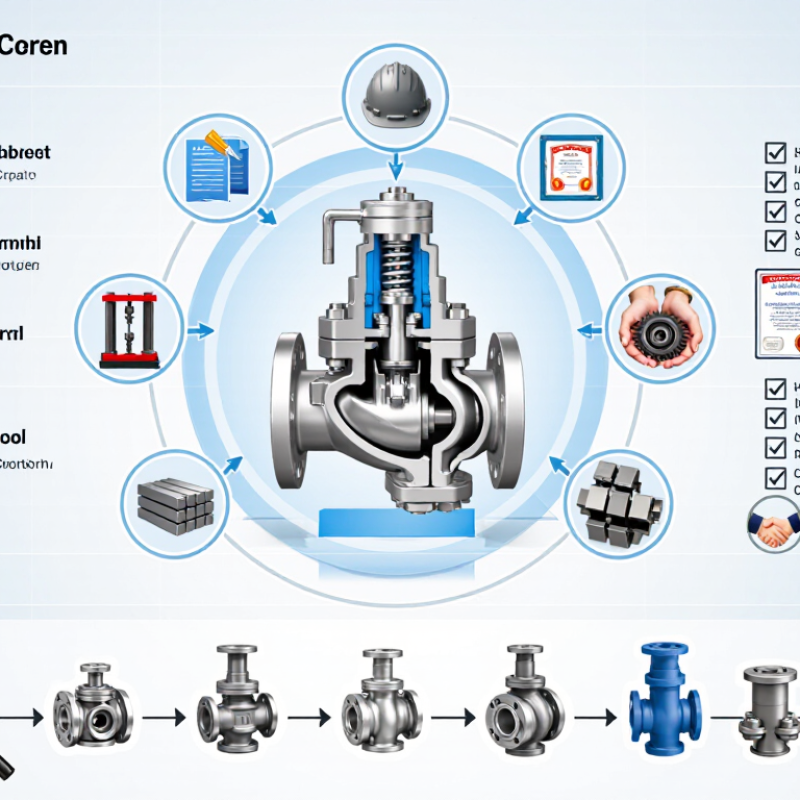
Pilot valves are small control devices that help operate larger valves. They sense pressure changes and direct fluid to a main valve actuator. This arrangement controls water, air, gas, or other approved media with limited pilot flow. In field inspections, technicians often find them near pressure regulators, storage tanks, and pipeline control stations. A typical pilot valve may contain a spring, diaphragm, nozzle, and adjustment screw. Small parts matter. Dirt or a hardened seal can cause unstable pressure, slow response, or unwanted cycling.
Global buyers use pilot valves because they provide accurate control without requiring a large direct-acting mechanism. They can reduce operating force and support steady pressure across changing demand. Buyers also value their compact structure, adjustable settings, and suitability for remote installations. However, selection is not simply about pressure range. Media compatibility, temperature, connection size, response speed, and maintenance access must match the application. A specification that looks correct may still fail in cold weather or poor filtration.
Tips: Ask for tested flow data, material certificates, and clear adjustment instructions. Check whether replacement seals are available locally. Install upstream filtration where contamination is possible. Keep a simple maintenance record. It exposes patterns. Also, allow room around the valve for inspection; crowded layouts often make minor repairs unnecessarily difficult.
China Top Pilot Valve Manufacturers for Global Buyers?
Evaluating a Chinese pilot valve manufacturer requires more than comparing prices or catalog photos. Confirm ISO 9001 certification, production scope, and certificate validity with the issuing body. Documents are only evidence. Ask for proof.
Review compliance with relevant standards, such as API 6D, ASME B16.34, or ISO 5208, according to the valve’s service. For corrosive or sour environments, check material records and applicable NACE requirements. Request EN 10204 inspection certificates, heat numbers, pressure-test results, and calibrated instrument records. A reliable factory should trace each valve from raw material to final inspection. It should also explain pilot response, set-pressure tolerance, leakage class, and temperature limits in measurable terms.
Factory experience matters. Examine machining areas, assembly benches, test equipment, and nonconformance procedures through an audit or live video inspection. Request a sample inspection report, not only a brochure. Ask whether testing covers the exact model, pressure range, and control medium you will purchase. One weakness remains easy to overlook: a manufacturer may pass routine tests but lack experience with unusual operating cycles. I would not reject every incomplete document immediately, but repeated vague answers deserve caution. Require a documented corrective-action process and a witnessed factory acceptance test before shipment. Small details matter, including protective caps, moisture control, packaging labels, and spare-part identification.
China-based pilot valve manufacturers are gaining attention from global buyers through focused product strengths rather than broad product lists. Some specialize in compact pneumatic pilot valves for factory automation. Others concentrate on hydraulic pilot controls used in mobile equipment and industrial systems. Their advantage often comes from flexible machining, responsive production, and practical customization.
Experienced buyers should examine the details behind each product range. Check pressure ratings, temperature limits, flow performance, sealing materials, and connection standards. A reliable manufacturer should provide dimensional drawings, material certificates, inspection records, and clear test procedures. Factory audits can reveal useful facts, such as machining accuracy, assembly cleanliness, and calibration discipline. Small details matter.
Many manufacturers can adjust spring settings, port layouts, coil options, or mounting dimensions. However, customization is not automatically a strength. Poorly controlled changes may create delays or inconsistent batches. Request a sample, then compare it with production units. Ask how the company manages incoming materials and final pressure testing. No supplier is perfect. Even a capable factory may have weak technical English or incomplete documentation. Buyers should identify these gaps early and record every requirement in approved drawings. This practical approach supports safer sourcing and more predictable pilot valve performance.
| Product Strength | Typical Pilot Valve Type | Common Applications | Typical Pressure Range | Common Materials | Relevant Standards | Key Buyer Verification Points |
|---|---|---|---|---|---|---|
| Gas Pressure Regulation | Pilot-operated pressure regulator | Natural gas transmission, city-gas distribution, industrial gas systems and boiler fuel lines | Application-dependent; many industrial designs cover inlet pressures from several bar to more than 100 bar | Carbon steel, ductile iron, stainless steel and alloy steel | API 6D, ASME B16.34, ISO 5208 and applicable gas regulations | Confirm flow coefficient, outlet-pressure stability, gas compatibility, shutoff class and low-temperature performance |
| Pilot-Operated Safety Relief | Pilot-operated pressure relief valve | Refineries, petrochemical plants, pipelines, storage vessels and high-pressure process equipment | Set pressure and temperature are selected according to the protected equipment and design code | Carbon steel, stainless steel, duplex stainless steel and nickel-alloy trim | API 526, API 527, API 520 and ASME Section VIII requirements where applicable | Request certified set-pressure testing, blowdown data, back-pressure limits, material certificates and capacity calculations |
| Control Valve Actuation | Pneumatic pilot valve and positioner pilot circuit | Steam, water, air, chemical processing and general industrial flow control | Pilot supply commonly uses instrument air in the approximate 3–8 bar range | Anodized aluminum, stainless steel, brass and engineered polymer components | IEC 60534, ISO 4414 and applicable electrical or hazardous-area standards | Check response time, air consumption, fail-safe action, port configuration and compatibility with the actuator |
| Hydraulic Control | Hydraulic pilot control valve | Water networks, irrigation, fire-protection systems and hydraulic pressure-control assemblies | Common water-control designs are available for low- to high-pressure distribution systems, subject to model selection | Ductile iron, cast iron, bronze, stainless steel and reinforced diaphragm materials | ISO 5208, EN 1074 and local waterworks or fire-protection requirements | Verify minimum differential pressure, water quality compatibility, diaphragm life and pressure-loss curves |
| Steam and Thermal Systems | Pilot-operated steam pressure-reducing valve | Boilers, heat exchangers, district heating, food processing and textile machinery | Steam pressure and temperature ratings depend on body design, trim and application class | Carbon steel, stainless steel, cast steel and heat-resistant trim alloys | ASME B16.34, EN 12516, IEC 60534 and applicable pressure-equipment rules | Confirm saturated or superheated steam service, Cv data, leakage class, noise control and condensate management |
| Oil and Petrochemical Service | Pilot-operated control or emergency shutdown valve | Crude oil pipelines, refined-product lines, terminals and petrochemical processing units | Class and pressure ratings are selected according to pipeline specification and process conditions | Forged or cast carbon steel, stainless steel, duplex steel and corrosion-resistant alloys | API 6D, ISO 14313, NACE MR0175 or ISO 15156 when sour service applies | Review fugitive-emission testing, fire-safe design, anti-static construction, sour-service compliance and traceability |
| Compact Instrumentation | Small-bore pneumatic or hydraulic pilot valve | Instrumentation panels, test benches, analytical equipment and packaged skid systems | Generally selected for instrument-air, gas or hydraulic pilot circuits rather than mainline flow | 316 or 316L stainless steel, brass, aluminum and chemically resistant seals | ASME B31.3 installation requirements and applicable pneumatic or instrumentation standards | Check connection thread standard, leakage rate, Cv, seal material, operating temperature and panel-mount dimensions |
| Export Manufacturing Capability | OEM, private-label and engineered-to-order pilot valve assemblies | International distributors, EPC projects, replacement programs and customized valve packages | Defined by the selected valve design, pressure class, connection type and service medium | Material options should be confirmed through drawings, bills of materials and inspection records | ISO 9001 quality systems, EN 10204 material documentation and project-specific inspection plans | Evaluate production capacity, dimensional inspection, hydrostatic testing, export packing, documentation and after-sales support |
Note: Pressure ranges, materials and standards shown above are commonly used industry categories and should be confirmed against the final model datasheet, design code, service medium and project specification.
China Top Pilot Valve Manufacturers for Global Buyers?
A capable pilot valve manufacturer combines stable machining, reliable sealing, and disciplined export procedures. Buyers should inspect material certificates, pressure-test records, and dimensional reports before approval. In practical audits, small details matter. Clean threads, protected ports, and readable markings often reveal factory discipline. Manufacturers with documented quality systems can reduce batch variation and improve traceability. However, certificates alone are not proof of performance. Independent testing remains valuable for critical applications.
Customization should begin with operating conditions, not a preferred product shape. Share pressure range, temperature, media type, connection standard, control signal, and installation space. Engineers can then select suitable body materials, seals, springs, and pilot settings. A useful supplier should provide drawings, samples, and clear revision control. Export capability also matters. Confirm packaging strength, spare-part labeling, inspection photos, and shipping documents. One overlooked issue is regional fitting compatibility. A valve may pass factory testing yet require adapters at the destination.
Tips: Request a sample batch first. Compare test results with the approved drawing. Ask how rejected parts are recorded. Visit the production line when possible. Do not accept vague claims about “custom quality.” A realistic supplier will explain limitations, lead times, and correction procedures. That honesty is sometimes more valuable than a polished catalog. Recheck every assumption before placing a large order.
Nominal pressure classes are standardized reference values commonly used in industrial valve and piping specifications. Buyers should confirm the applicable standard, temperature range, materials, sealing design, testing requirements, and export documentation with each manufacturer.
Higher PN ratings indicate higher nominal pressure classes, but they do not represent universal operating pressure at every temperature. Customization may include connection standards, body and trim materials, actuator interfaces, control functions, inspection plans, and export packaging.
Selecting a pilot valve supplier requires more than comparing unit prices. Grand View Research valued the global industrial valves market at about USD 79 billion in 2023. That scale attracts capable factories and inconsistent traders. Buyers should verify legal registration, production capacity, export history, and engineering support. Ask for recent project references, not only a digital catalogue.
Request material certificates, pressure-test records, calibration data, and a clear control plan. ISO 5208 defines pressure testing and leakage classifications for industrial valves. A supplier should explain which test level applies to your service conditions. Check whether serial numbers connect each valve to inspection records.
Small details matter. A missing traceability link can delay commissioning.
Audit the factory remotely first, then arrange an independent inspection before shipment. Review machining equipment, clean assembly areas, storage conditions, and nonconformance procedures. The International Trade Centre reports that technical compliance and documentation strongly affect industrial export performance. Still, paperwork can look perfect while process discipline remains weak.
That is an uncomfortable risk. Require a sample valve, witness functional testing, and compare drawings against the delivered configuration.
Confirm response pressure, connection dimensions, seal materials, temperature limits, and spare-part availability.
Do not accept vague answers. A lower quotation may hide testing gaps, limited engineering depth, or expensive after-sales delays.