What Are the Top Industrial Valve Types in 2026?

Industrial valves rarely attract attention until a line leaks, a pump loses pressure, or a process must stop. Yet choosing the right valve affects safety, flow control, maintenance, and operating cost. In 2026, buyers will still compare familiar designs—gate, globe, ball, butterfly, check, and plug valves—but the best choice depends on the fluid, pressure, temperature, and duty cycle. Small details matter: a corrosive stream may need different trim than clean water, while frequent throttling can wear a valve not designed for that job.

Philip L. Skousen, author of the Valve Handbook, is a useful reference for practical valve selection. A concise principle for this guide is: “Choose for the service, not the catalog headline.” This is an editorial summary, not a verified verbatim quotation from Skousen. That distinction matters. Technical recommendations should be traceable to credible sources, not dressed up as expert testimony.

This overview examines the leading industrial valves, their operating strengths, and the trade-offs engineers should weigh. A ball valve can provide quick shutoff. A globe valve can offer finer throttling. A check valve helps prevent reverse flow, but poor sizing may cause chatter. There is no universal winner. Real systems also bring imperfect data, aging equipment, and budget limits. A careful comparison can narrow the choices, but final selection should be checked against actual process conditions and manufacturer specifications.
What Are the Top Industrial Valve Types in 2026?

Industrial Valve Basics: Isolation, Throttling, and Non-Return Functions

What Are the Top Industrial Valve Types in 2026?

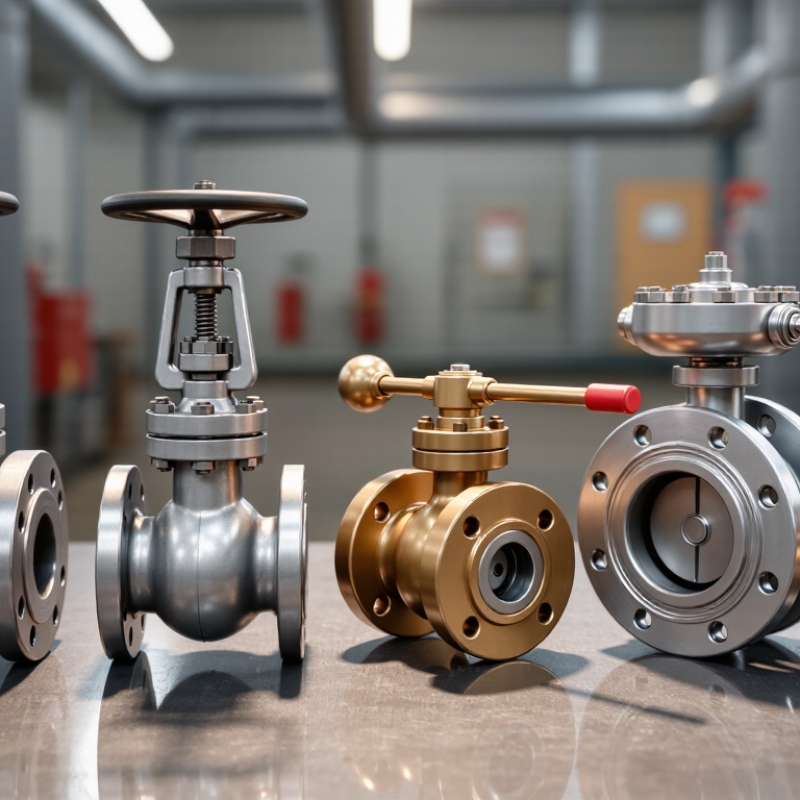
Industrial valves are best compared by what they do in a line, not by shape alone. Isolation valves stop flow for maintenance or emergencies. A gate valve offers a relatively open path when fully raised, while a ball valve turns quickly through a quarter-turn. Butterfly valves save space in larger pipes, but disc position can affect flow even when the valve is used mainly for isolation. Check pressure, temperature, fluid, and shutoff requirements before choosing.

Throttling is different. Globe and needle valves can adjust flow steadily because their moving elements change the opening in smaller increments. They suit metering and control duties, but pressure loss and wear may rise when a valve stays partly open. A precise-feeling handwheel does not guarantee stable control. Actuation and control strategy matter too.

Non-return valves, often called check valves, allow flow in one direction and close when flow reverses. A swing check uses a hinged disc; lift and spring-loaded designs respond differently to flow and orientation. Not the same job. Check valves do not replace dependable isolation valves. Sizing, installation direction, and closing speed deserve attention: a poorly matched check valve can chatter or slam. Actual service conditions should guide selection, since a datasheet may not capture every transient in the pipe.

Gate, Globe, and Ball Valves: Designs and ASME Class 150–2500 Ratings

What Are the Top Industrial Valve Types in 2026?

Gate, Globe, and Ball Valves: Designs and ASME Class 150–2500 Ratings

Gate valves are designed mainly for full-open or full-closed service. Their sliding gate creates little flow obstruction when fully raised. They are not ideal for routine throttling, which can damage seating surfaces.

Globe valves guide flow through a changing passage, making flow adjustment more controlled. That added control often brings a higher pressure drop.

Ball valves use a rotating quarter-turn closure and offer quick operation. Their compact action is useful where fast shutoff matters.

ASME Class 150 through 2500 identifies pressure-temperature rating categories, not one universal pressure limit. The allowable pressure depends on factors such as body material and operating temperature. A Class 300 valve, for example, may have different limits across materials and temperatures.

Check the applicable pressure-temperature tables and the valve’s design standard before specifying equipment. In practical selection, also consider fluid, temperature swings, cycling frequency, and maintenance access. These details are easy to overlook when a project is moving quickly.

Tips: Match valve design to its actual duty, then verify the class rating at the highest expected temperature. Confirm end connections, materials, and actuator needs against the piping specification. If the service conditions are uncertain, pause and review the assumptions; a tidy datasheet can still hide a poor fit.

Butterfly and Plug Valves: Quarter-Turn Operation and Typical Uses

Butterfly and plug valves both use quarter-turn motion, but they behave differently in the line. A butterfly valve turns a disc through 90 degrees. Its compact body suits large water, HVAC, and treatment pipelines where space and weight matter. The disc remains in the flow, though, so it can affect pressure loss and handling of solids. For a slurry line, check the valve’s trim, seat material, and operating torque against actual service conditions. “Quarter-turn” alone tells you too little.

A plug valve rotates a bored plug to align or block the passage. This simple motion can work well for isolation in gas, chemical, and slurry duties, provided the design and materials match the fluid. Some designs need more operating torque, especially as deposits build up. That detail is easy to overlook. Grand View Research estimated the global industrial valves market at USD 80.6 billion in 2024 and projected a 5.3% compound annual growth rate through 2030. This broad market estimate does not prove which quarter-turn type is best; selection still depends on pressure, temperature, fluid cleanliness, and maintenance access. I would not choose from a catalogue label alone. A site-specific review is less tidy, but usually more dependable.

Check and Control Valves: Cv Sizing, Actuation, and Flow Regulation

Industrial flow systems often pair check valves with control valves, but they serve different purposes. A check valve allows forward flow and limits reverse flow. A control valve adjusts its opening to regulate flow, pressure, or temperature. Small details matter. On a pump discharge line, a poorly matched check valve may close with a sharp impact and contribute to pressure surges. Selection depends on flow conditions, not just pipe size.

For control valves, the flow coefficient, Cv, helps estimate capacity at a given pressure drop. It is not a stand-alone sizing answer. Engineers also need fluid properties, operating range, upstream and downstream pressures, and the possibility of cavitation or flashing. A valve sized only for peak flow may run poorly at normal demand. That mismatch is easy to overlook. Check the expected minimum, normal, and maximum conditions, then review valve authority and required rangeability.

Actuation affects how reliably the valve responds. Pneumatic, electric, and hydraulic actuators differ in available force, response speed, and maintenance needs. Specify the required fail position and confirm the actuator can handle the valve’s torque or thrust under real operating conditions. Conventional check valves usually respond to pressure differences rather than an external actuator, but closing behavior still deserves attention. Calculations help; field conditions can still surprise you. Revisit the assumptions when measured flow or pressure differs from the design case.

What Are the Top Industrial Valve Types in 2026? - Check and Control Valves: Cv Sizing, Actuation, and Flow Regulation

Valve Type Primary Function Flow Regulation Typical Actuation Cv Sizing and Selection Common Applications and Considerations
Swing check valve Allows flow in one direction and closes when flow reverses. Not intended for throttling; the disc opens and closes in response to flow and pressure conditions. Normally automatic, using flow and gravity or a spring; no external actuator is usually required. Select using expected flow, pressure loss, fluid properties, orientation, and the valve’s cracking-pressure data. Do not treat it as a modulating control valve. Often used in larger pipelines carrying relatively clean fluids. Check installation orientation and the risk of disc slam in systems with rapid flow reversal.
Lift check valve Prevents reverse flow with a guided disc or piston that lifts from its seat. On/off check action rather than continuous flow control. Normally automatic; the disc responds to forward and reverse differential pressure. Evaluate flow rate, pressure drop, fluid cleanliness, and the manufacturer’s minimum operating differential pressure and cracking-pressure data. Common in applications where guided closure is useful. Many designs require installation in a specified orientation, which varies by construction.
Dual-plate check valve Limits reverse flow using two spring-loaded plates that close toward the centerline. Self-acting check service; not designed for throttling. Normally automatic, with spring assistance and flow-driven opening. Compare the pressure-drop curve at the intended flow with the system’s available pressure margin. Confirm suitability for the fluid, velocity, and installation position. Its wafer-style body can fit between pipeline flanges. Dynamic conditions, including surge and reverse-flow velocity, should be considered when selecting the design.
Globe control valve Changes flow by moving a plug relative to a seat. Suitable for modulating service. Installed flow behavior depends on trim design, valve travel, and piping conditions. Commonly paired with a pneumatic diaphragm or piston actuator; electric and hydraulic actuators are also used. For liquid service, a preliminary non-choked estimate in customary U.S. units is Cv = Q × √(SG/ΔP), where Q is flow in US gal/min, SG is specific gravity relative to water, and ΔP is pressure drop in psi. Final sizing must check pressure recovery, cavitation, flashing, and trim limits. Useful where controllability and a defined pressure drop are important. Select trim and materials for the fluid, temperature, pressure, and erosion or corrosion risks.
Segmented-ball control valve Regulates flow with a contoured ball segment rotating inside the body. Provides modulating control; the flow characteristic depends on the port and trim geometry. Typically quarter-turn pneumatic, electric, or hydraulic actuation, often with a positioner for modulating control. Use the applicable liquid or gas sizing method and the valve’s rated Cv data. Check maximum and minimum required Cv, pressure ratio, noise, cavitation, and actuator torque requirements. Can provide a relatively large flow capacity in a compact rotary design. Suitability for solids, abrasive media, and shutoff duty depends on the specific construction and materials.
Butterfly control valve Controls flow with a rotating disc positioned in the flow stream. Can modulate flow when specifically designed and sized for control; installed characteristics may differ from inherent characteristics. Commonly operated by a quarter-turn pneumatic or electric actuator; hydraulic actuation is also possible. Use rated Cv versus travel data and the correct service-specific sizing method. Check pressure drop, disc velocity, cavitation or flashing risk, and required shutoff performance. Compact and often suited to large line sizes. Disc, seat, body, and shaft materials must be compatible with service conditions and required leakage limits.
Diaphragm control valve Regulates flow by moving a flexible diaphragm against a weir or across the flow passage. Modulating capability depends on body and diaphragm design; some configurations are primarily intended for isolation. May use a pneumatic actuator or an electric actuator, depending on the design and control requirements. Use the manufacturer’s rated Cv and sizing data for the specific body and diaphragm combination. Account for pressure drop, diaphragm limits, fluid properties, and the required operating range. Useful where the process benefits from a fluid-contact barrier or a smooth, cleanable flow path. Confirm diaphragm compatibility with temperature, pressure, and process media.

Sizing note: Cv is a flow-capacity coefficient, not a universal valve-size lookup. The liquid estimate shown is a preliminary relationship for non-choked flow in customary U.S. units; gas, steam, flashing, cavitating, and other complex services require the appropriate sizing method and verified valve data. Confirm the final selection against current manufacturer performance data and applicable project standards.

API 598 and ISO 5208: Pressure-Test Rules for Industrial Valves

For industrial valves, pressure testing is more than a paperwork ritual. API 598 and ISO 5208 provide procedures for checking pressure boundaries and seat tightness. They are not interchangeable, so the specified standard and edition matter.

Under API 598, inspectors typically check shell strength, closure tightness, and, where applicable, backseat sealing. Test pressures and durations depend on valve design, size, pressure class, and the standard edition. Water is commonly used for shell testing. Pneumatic tests require careful controls because compressed gas stores more energy. Keep it short.

ISO 5208 sets test procedures and leakage-rate categories for metallic valves. Rate A allows no visually detectable leakage under the specified test conditions; other rates set permitted leakage limits. Choose the required rate to suit the service and purchasing documents, not habit. Before testing, confirm the valve is clean and isolated from accessories that are not rated for the test pressure. Use calibrated gauges, and record the medium, pressure, duration, and observations. A test sheet can look complete while a setup error goes unnoticed. Check the actual arrangement, too.

Industrial Valve Types & Pressure-Test Rules (2026)

Gate, globe, check, ball, and butterfly valves serve different flow-control needs. This chart shows API 598 minimum test durations by nominal pipe size; it does not rank valve types.

API 598 test durations vary by valve size and test type. ISO 5208 specifies pressure-testing procedures and leakage-rate acceptance criteria. Requirements can vary by edition and valve configuration; consult the applicable standard and purchase specification.