China’s valve industry serves a wide range of applications, from water treatment and building services to power generation and petrochemical processing. Its manufacturers differ in scale, product focus, engineering capacity, and export experience. A company known for large-diameter gate valves may not be the best fit for a compact control-valve project. Details matter.
This guide explores ten notable Chinese valve manufacturers and the strengths buyers may want to investigate. It considers product portfolios, materials, pressure ratings, manufacturing capabilities, quality controls, and customer support. These practical points offer a clearer starting place than promotional claims alone. A useful valve home is built on evidence: clear specifications, responsive technical teams, and documentation that matches the supplied product.
There is no single ranking that suits every project. Capabilities can change, and information published by manufacturers should be checked against current requirements. Buyers should confirm relevant certificates, inspection records, delivery terms, and service arrangements before making a decision. That takes time. It is worth doing.
The companies in this overview are presented as options for further research, not as a guaranteed endorsement. Some details may be difficult to compare directly, especially when product categories differ. That is a limitation, and it deserves attention. Use the profiles to identify potential suppliers, then request technical documents and discuss operating conditions with qualified professionals. A careful comparison can help narrow the field without treating the word “top” as a promise of perfect fit.
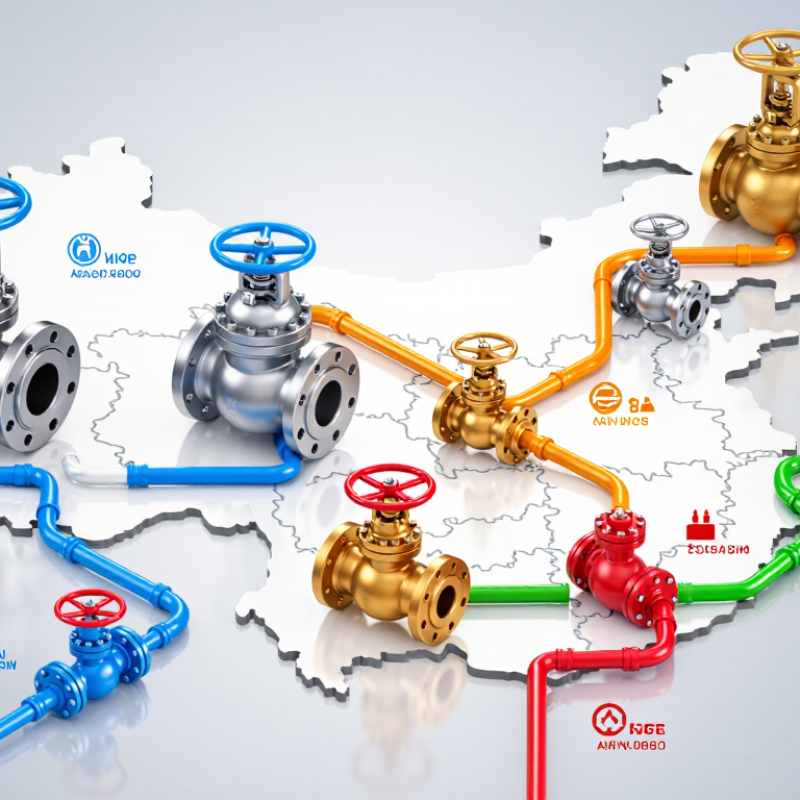
China’s valve manufacturing industry is broad, layered, and highly specialized. Large producers often serve power, petrochemical, water, and infrastructure projects, while smaller workshops focus on standard valves or individual components. A single industrial district may contain casting suppliers, machining shops, seal makers, and testing facilities within a short drive.
The structure matters when comparing manufacturers. Some factories control casting, machining, assembly, and pressure testing under one roof. Others rely on outside suppliers for bodies or actuators, which can affect lead times and consistency. Ask how materials are traced and how finished valves are tested. A pressure-test record is more useful than a polished product photo.
Details matter.
Regional clusters support this network, but capabilities vary between facilities, even within the same area. Export-oriented plants may maintain documentation and inspection procedures suited to overseas buyers; domestic-focused suppliers may prioritize fast delivery and common specifications. Neither model guarantees quality. Buyers should match the factory’s actual equipment, certifications, and production history to the application. A site visit can reveal practical details, such as whether inspection gauges are calibrated and whether parts are clearly identified. This comparison is not always simple. A lower price may reflect a different test scope, material grade, or service expectation—not merely a more efficient factory.
Evaluating a Chinese valve manufacturer starts with evidence, not factory size. Check whether its products match the project’s pressure, temperature, media, and connection requirements. Request traceable material certificates, heat numbers, inspection records, and pressure-test reports linked to actual orders. ISO 5208 specifies pressure-testing requirements for industrial valves; relevant API or Chinese GB standards may also apply. Certificates matter. Verify their scope, issuer, and validity rather than relying on a logo in a brochure.
This indicates a substantial industrial supply base, but steel output alone cannot prove valve quality. Look deeper. Compare machining and assembly capacity, testing access, defect rates, and delivery performance on recent projects. Ask for references involving similar fluids and operating conditions, plus spare-parts lead times and field-service coverage. Capacity claims vary. An on-site audit can reveal subcontracting, calibration gaps, or weak document control that sales materials omit. Assess lifecycle costs, including maintenance intervals and energy losses, not only the purchase price.
China’s valve sector includes specialists in water systems, energy, chemicals, and industrial automation. Without naming companies, these ten profiles describe common areas of expertise rather than a verified ranking. Grand View Research estimated the global industrial valves market at USD 78.9 billion in 2023, underscoring demand for dependable flow-control equipment. The figure covers the global market, not Chinese manufacturers alone.
That distinction matters.
Typical profiles include a gate-and-globe valve maker serving pipelines; a ball-valve specialist focused on tight shutoff; and a butterfly-valve producer supplying water networks. Others concentrate on control valves, where accurate positioning matters, or high-pressure valves for power systems. Some build corrosion-resistant equipment for chemical processing.
Others serve municipal water treatment, cryogenic applications, or hygienic production lines. A tenth profile may combine valves with sensors and remote monitoring.
Details matter. Buyers should compare pressure and temperature ratings, materials, testing records, and service support. Catalog claims can look convincing; independent test evidence is stronger.
These profiles are useful starting points, not proof of market rank or product suitability.
China’s leading valve manufacturers supply a broad mix of industrial valves, including gate, globe, ball, butterfly, check, and control valves. Their product ranges often include stainless-steel, carbon-steel, and alloy-steel options for different pressures and temperatures. Some factories also make large-diameter valves for water networks and compact valves for equipment skids. A neat ranking can mislead. Product fit matters more than a position on a list.
Oil and gas operators commonly need pressure-rated valves for pipelines, refineries, and processing plants. Power stations use isolation and control valves in steam and cooling-water systems, where temperature changes can be severe. Municipal water projects rely on resilient-seated gate and butterfly valves to manage flow in treatment plants and distribution lines. Chemical and pharmaceutical facilities may require corrosion-resistant materials and smooth internal surfaces. Details matter: an unsuitable seat material can wear quickly, even when the valve body looks robust.
Other manufacturers focus on mining, shipbuilding, construction machinery, and general manufacturing. Their catalogues may include slurry valves for abrasive mixtures, marine valves designed for confined spaces, and automated units fitted with electric or pneumatic actuators. Buyers should check test records, material certificates, operating limits, and service support rather than relying on catalogue language alone. Specifications can be imperfectly stated. Ask how each model performs under the actual fluid, pressure, and maintenance conditions.
Technology, Quality Standards, and Export Capabilities of Chinese Valve Makers
For Chinese valve manufacturers, export readiness depends on more than production volume. It rests on repeatable machining, reliable materials, and test records buyers can verify. Grand View Research estimated the global industrial valves market at USD 78.6 billion in 2023, with a projected 4.8% annual growth rate from 2024 to 2030. That expanding market raises expectations for performance and documentation. Small details matter: a clearly marked pressure rating, a traceable casting batch, and a test report that matches the shipped valve.
Quality standards help buyers compare suppliers, but certificates alone are not enough. ISO 9001 addresses quality management systems, while ISO 5208 defines pressure testing for industrial valves. Buyers should check the applicable edition, test method, and acceptance criteria. They can also request material certificates, dimensional inspection records, and evidence of production testing. Look closely. A polished document may not answer whether a specific valve was tested under the required conditions.
Export capability shows up in practical details: accurate packing lists, consistent product drawings, and prompt technical replies across time zones. For larger orders, sample inspections and agreed inspection plans can reduce surprises. Yet paperwork can still lag behind production, and smaller suppliers may need clearer review procedures. That is worth discussing early. A careful buyer assesses factory controls and shipment support, not just quoted price or promised delivery dates.
This anonymized comparison presents ten valve-making capability profiles, not a verified ranking of individual manufacturers. Standards listed are relevant references for the stated valve types; certification, product scope, test results, and export documentation should be confirmed directly for each supplier.
| Capability Profile | Typical Product Focus | Technology and Engineering | Relevant Standards | Quality Evidence to Request | Export Readiness to Verify |
|---|---|---|---|---|---|
| Profile 1 — Pipeline valves | Gate, ball, check, and plug valves for transmission and process pipelines. | Pressure-boundary design, body and trim material selection, sealing design, and pressure testing. | API 6D; ASME B16.34; ISO 5208. | Current quality-system certificate, product specifications, material certificates, and traceable pressure-test records. | Confirm project-specific inspection plans, packing requirements, shipping records, and destination-market documentation. |
| Profile 2 — Steel gate valves | Bolted-bonnet steel gate valves used in industrial piping and process service. | Wedge and seat design, pressure-rated construction, machining control, and shell and seat testing. | API 600; ASME B16.34; ISO 5208. | Verify design standard and edition, pressure class, material traceability, inspection reports, and test acceptance criteria. | Check whether data books, inspection certificates, and preservation instructions can be supplied for the order. |
| Profile 3 — Compact forged-steel valves | Small-bore forged-steel gate, globe, and check valves. | Forged pressure-containing components, compact layouts, end-connection options, and controlled assembly. | API 602; ASME B16.34; ISO 5208. | Request forging material records, heat-treatment documentation where applicable, dimensional inspection, and pressure-test reports. | Confirm thread, socket-weld, or flanged end requirements and the export packing method appropriate to the shipment. |
| Profile 4 — Metal-seated ball valves | Metal ball valves for industrial isolation and demanding process conditions. | Ball and seat machining, coating or hard-facing options, actuator integration, and leakage-control testing. | API 608; ASME B16.34; ISO 5208. | Check the specified leakage criteria, material and coating records, test procedure, and actuator functional-test evidence. | Verify that configuration drawings, operating instructions, and any requested third-party inspection can be provided. |
| Profile 5 — Resilient-seated butterfly valves | Concentric or other resilient-seated butterfly valves for water and general industrial duties. | Disc and liner selection, sealing geometry, corrosion-compatible materials, and manual or actuated operation. | API 609; ISO 5208; applicable project piping and pressure requirements. | Request body, disc, and liner material details, dimensional checks, and pressure-test records for the ordered configuration. | Confirm flange compatibility, coating specifications, product labeling, and packaging suitable for the destination and transport route. |
| Profile 6 — High-performance butterfly valves | Double-offset or triple-offset butterfly valves for higher-performance isolation applications. | Offset geometry, seat-material selection, torque calculation, and actuator sizing for the stated operating conditions. | API 609; ASME B16.34; ISO 5208. | Review pressure-temperature limits, torque data, material records, seat-test results, and inspection documentation. | Ask for confirmed operating data, actuator interface details, installation guidance, and order-specific inspection records. |
| Profile 7 — Control valves | Globe-style and other control valves for regulating flow, pressure, or temperature. | Flow-characteristic selection, trim design, actuator and positioner matching, and control-loop configuration. | IEC 60534 series; applicable pressure-boundary requirements such as ASME B16.34. | Request sizing assumptions, capacity data, characteristic and travel information, calibration records, and functional-test reports. | Verify instrument compatibility, electrical or pneumatic specifications, manuals, and documentation required by the project. |
| Profile 8 — Cryogenic valves | Extended-bonnet valves and other designs intended for specified low-temperature service. | Low-temperature material selection, stem extension design, thermal considerations, and service-specific testing. | Applicable product standards; ISO 28921-1 for industrial valves designed for cryogenic service. | Confirm the stated design temperature, material suitability, low-temperature test scope, and order-specific test reports. | Check preservation, moisture protection, handling instructions, and whether the documentation matches the project specification. |
| Profile 9 — Fugitive-emission-focused valves | Valve designs specified for controlling external leakage in process service. | Stem-sealing systems, packing selection, manufacturing controls, and emission-test capability for the specified design. | ISO 15848-1; applicable product standards and project requirements. | Request the test report and verify its valve type, size, pressure class, temperature, test class, and configuration scope. | Confirm whether certificates and reports cover the exact supplied configuration rather than a different product variant. |
| Profile 10 — Custom-engineered valves | Special-purpose valves designed around project-specific materials, dimensions, connections, or operating conditions. | Engineering review, drawing control, material substitution management, prototype or qualification testing, and configuration control. | Applicable product standards selected for the design and service; ASME B16.34 may apply to pressure-boundary requirements. | Review approved drawings, design calculations where required, deviation records, material traceability, inspection plans, and final test reports. | Agree on document language, marking, inspection hold points, export packing, and required destination-market compliance before purchase. |