Top RO Water Machine Plant Manufacturers for Global Buyers

Choosing the right Ro Water Machine Plant can shape water quality, operating costs, and long-term production reliability. Global buyers need more than attractive brochures or impressive factory photographs. They should examine membrane performance, pretreatment design, pump efficiency, control systems, and after-sales support. A practical evaluation begins with the water source, required output, recovery rate, and daily operating hours.

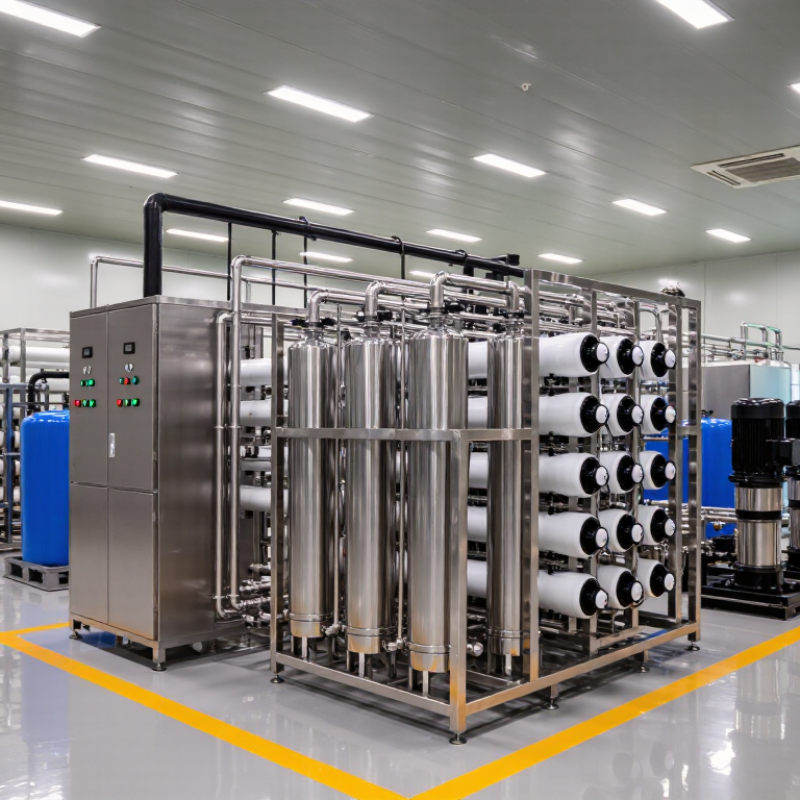
Experienced manufacturers usually provide clear process drawings, material specifications, and test records. They can explain why multimedia filters, activated carbon, softeners, or ultrafiltration are included. Reliable suppliers also discuss cleaning schedules and replacement intervals before signing a contract. Details matter. A stainless-steel frame, labeled pipelines, and accessible gauges can simplify maintenance at a busy bottling site.

Still, no ranking is perfect. Manufacturer capabilities may change, and a strong export record does not guarantee a suitable design for every region. Buyers should verify references, factory quality controls, technical certifications, warranty terms, and local service arrangements. Destination-country requirements also deserve careful review. A supplier that answers difficult questions directly often deserves more attention than one offering the lowest price.

This guide introduces leading Ro Water Machine Plant manufacturers for global buyers. It compares engineering experience, customization capacity, production quality, documentation, and support after delivery. The goal is not to promote one universal solution. Instead, it helps purchasing teams identify dependable partners, avoid hidden costs, and request realistic performance data before making a final decision. Performance claims should be tested. That step is easy to overlook.
Top RO Water Machine Plant Manufacturers for Global Buyers

RO Water Machine Manufacturing: Industry Scope and Product Categories

RO water machine manufacturing covers far more than assembling pumps, membranes, and stainless-steel frames. Reliable plants usually manage process design, fabrication, electrical integration, testing, and after-sales support. Their product categories often include residential units, commercial systems, industrial RO skids, brackish-water systems, and seawater desalination equipment.

Each category requires different engineering decisions. A small office unit may use compact 1812 membranes and simple filter housings. A factory system may use 4040 or 8040 membranes, high-pressure pumps, dosing equipment, and automated control panels. Containerized systems add insulation, ventilation, drainage, and remote monitoring. These details affect maintenance access and operating costs.

Quality depends on measurable evidence. Buyers should request feed-water assumptions, recovery rates, membrane flux, material certificates, electrical test records, and documented factory acceptance testing. A capable manufacturer also explains pretreatment requirements instead of promising unlimited performance. That matters.

In field assessments, neglected pretreatment is a common weakness. Sediment, hardness, and chlorine can shorten membrane life quickly. No system is maintenance-free. Even well-designed equipment needs cleaning schedules, calibrated instruments, and trained operators. Manufacturers serving global buyers should also provide clear manuals, spare-parts lists, language support, and region-appropriate electrical configurations. Some product claims remain too broad, so independent water analysis and pilot testing deserve attention before large-scale procurement.

Key Criteria for Evaluating Global RO Plant Manufacturers

Evaluating global RO plant manufacturers requires evidence, not polished brochures. The International Desalination Association’s 2023–2024 industry reporting shows desalination is expanding rapidly, increasing the need for dependable engineering and operation. Ask for operating records from plants with similar feedwater, capacity, recovery rate, and climate. A coastal brackish-water system is not automatically suitable for inland groundwater.

Technical verification should begin with pretreatment design. Request raw-water analysis, pilot-test results, membrane flux assumptions, and projected energy consumption. The International Energy Agency has reported that modern seawater desalination commonly requires around 2.5–5 kWh per cubic metre, depending on site conditions and technology. Small efficiency differences become expensive over a 20-year project. Check whether the quotation includes cleaning systems, monitoring instruments, concentrate management, and operator training.

Look beyond the equipment price. The World Health Organization’s Guidelines for Drinking-water Quality support risk-based monitoring, so manufacturers should explain how they control microbiological, chemical, and membrane-integrity risks. Verify ISO-certified quality systems, factory acceptance testing, performance guarantees, and local compliance documentation. Spare-parts availability matters. So does response time.

A low purchase price can still look attractive. Yet lifecycle costs may reveal weaker pumps, limited automation, or difficult maintenance access. I would also question impressive recovery figures without seasonal feedwater data. Independent laboratory testing and customer references are more persuasive than sales claims. The best evaluation remains imperfect, because local water chemistry can change after installation.

Leading RO Water Machine Plants by Region and Manufacturing Strength

Top RO Water Machine Plant Manufacturers for Global Buyers

Leading RO Water Machine Plants by Region and Manufacturing Strength

Regional manufacturing strengths shape how buyers evaluate reverse osmosis water machine plants. Chinese plants often provide broad model ranges, stainless steel frames, and flexible private-label production. Many support container-scale orders and custom electrical settings. However, inspection depth can vary between factories. Buyers should verify membrane housing tests, pump curves, and final water quality records.

Indian manufacturers often focus on practical systems for homes, small businesses, and light industrial sites. Their strengths include adaptable designs, accessible replacement parts, and strong knowledge of local water conditions. European plants commonly emphasize engineering documentation, energy efficiency, hygienic construction, and automated monitoring. These advantages can raise purchase costs, but they may reduce service risks over time. North American facilities often excel in modular skids, standardized controls, and detailed commissioning procedures. Middle Eastern producers typically design for heat, dust, and high mineral content. That experience matters in demanding installations.

A reliable plant should explain recovery rate, salt rejection, pretreatment needs, and maintenance intervals clearly. Ask for factory acceptance test records. Request videos of pressure testing. Confirm local electrical and potable-water requirements before shipment. Speak with a technical contact, not only a sales representative. I have seen attractive quotations hide weak after-sales planning. That mistake is expensive. Manufacturing strength is not only production volume. It includes process control, operator training, spare-parts access, and traceable quality checks. Buyers should compare regional advantages against local water analysis, installation skills, and service expectations.

Top RO Water Machine Plant Manufacturers for Global Buyers - Leading RO Water Machine Plants by Region and Manufacturing Strength

Regional comparison of common manufacturing capabilities, compliance frameworks, production formats, and application strengths.

Region Manufacturing Profile Typical RO System Formats Primary Manufacturing Strengths Common Compliance Frameworks Best-Fit Buyer Requirements Important Procurement Checks
East Asia Large-scale manufacturing ecosystem with extensive stainless-steel fabrication, electrical integration, component sourcing, and export-oriented assembly. Commercial skids, industrial RO systems, containerized units, multi-stage plants, and customized OEM assemblies. Broad product range, competitive fabrication, rapid customization, high-volume assembly, and strong private-label capability. ISO 9001-based quality systems, CE-related requirements for applicable markets, electrical safety rules, and destination-country water regulations. Importers seeking flexible specifications, competitive capital cost, multiple capacity options, and consolidated equipment supply. Verify membrane and pump specifications, pressure-vessel documentation, factory testing, spare-parts availability, wiring standards, and English technical manuals.
South Asia Strong domestic demand for drinking-water, institutional, industrial, and packaged-water treatment equipment, supported by local metalworking and system integration. Community drinking-water systems, commercial RO skids, industrial pretreatment lines, and packaged-water treatment plants. Application-focused engineering, local installation support, cost-conscious designs, and adaptation to variable feed-water quality. ISO 9001 practices, national drinking-water requirements, electrical codes, pressure-equipment rules, and project-specific sanitary standards. Municipal contractors, hotels, hospitals, schools, factories, and buyers requiring local commissioning and after-sales service. Review pretreatment design, recovery assumptions, local water analysis, service coverage, operator training, and long-term consumables supply.
Europe Mature engineering market emphasizing documented design control, energy efficiency, hygienic construction, automation, and lifecycle performance. Industrial process-water skids, pharmaceutical and food-grade systems, high-recovery plants, and automated modular packages. Advanced controls, energy-saving designs, hygienic materials, traceability, technical documentation, and complex process integration. CE marking where applicable, ISO 9001, EU machinery and electrical requirements, food-contact or hygienic rules, and site-specific water legislation. Food and beverage producers, pharmaceutical facilities, laboratories, utilities, and buyers prioritizing documentation and lifecycle reliability. Confirm conformity assessment, material certificates, automation language, validation documents, energy data, FAT/SAT scope, and service response terms.
Middle East Specialized demand for desalination and water reuse, with manufacturers and integrators experienced in high-salinity feed water, harsh climates, and remote installations. Brackish-water RO, seawater RO, containerized desalination units, mobile plants, and large industrial treatment packages. Corrosion-resistant construction, high-pressure systems, climate adaptation, remote monitoring, and integration with pretreatment and energy-recovery equipment. ISO-based quality systems, project-specific utility standards, pressure-equipment requirements, electrical regulations, and applicable drinking-water guidelines. Utilities, resorts, construction projects, remote communities, industrial sites, and buyers needing desalination or water-reuse capability. Check feed-water salinity assumptions, energy consumption, corrosion protection, cooling and ventilation, chemical dosing, reject-water disposal, and local service support.
North America Engineering-led market with emphasis on packaged treatment, instrumentation, regulatory documentation, industrial automation, and serviceable modular designs. Commercial and industrial skids, point-of-use systems, process-water packages, high-purity systems, and municipal-scale modules. Controls integration, remote monitoring, modular engineering, commissioning support, and application-specific water-quality design. NSF/ANSI drinking-water standards where applicable, UL or equivalent electrical requirements, ASME-related pressure practices, and local regulatory codes. Industrial facilities, commercial buildings, laboratories, food processing, healthcare, and buyers requiring detailed compliance documentation. Confirm certification scope, electrical enclosure requirements, local plumbing rules, controls compatibility, warranty coverage, and replacement-component lead times.
Latin America Growing market combining imported components with local skid fabrication, installation, commissioning, and service capabilities. Commercial RO systems, agricultural water-treatment packages, industrial skids, rural systems, and modular containerized units. Local adaptation, installation flexibility, agricultural applications, practical maintenance design, and regional project support. ISO-based quality practices, national sanitation rules, local electrical codes, pressure requirements, and project-specific environmental regulations. Agriculture, mining, food processing, hospitality, rural supply projects, and commercial users seeking localized service. Assess logistics, import duties, local inventory, language support, feed-water testing, membrane replacement access, and technician availability.
Africa Demand is driven by decentralized water supply, industrial development, mining, hospitality, and projects requiring robust equipment for variable infrastructure conditions. Solar-assisted units, containerized systems, borehole-water RO, brackish-water plants, mobile packages, and community-scale systems. Modularity, rugged construction, simplified operation, remote-site deployment, diesel or solar integration, and serviceable pretreatment systems. ISO-based quality systems, national drinking-water standards, donor or project specifications, electrical codes, and applicable WHO guidance. NGO and public-water projects, mining, hotels, rural communities, healthcare facilities, and remote industrial sites. Verify power stability, operator skill requirements, chemical availability, remote monitoring, spare-parts logistics, corrosion protection, and water-quality testing.
Oceania Quality-focused market serving remote communities, agriculture, mining, commercial facilities, and water-reuse projects with strong attention to environmental performance. Brackish-water RO, rural systems, mining-water packages, containerized plants, rainwater integration, and commercial treatment skids. Remote-site reliability, water efficiency, automation, corrosion management, modular installation, and integration with reuse systems. Australian or New Zealand drinking-water requirements where applicable, electrical safety rules, plumbing standards, ISO-based quality systems, and project permits. Mining, agriculture, island communities, remote facilities, commercial buildings, and buyers prioritizing water efficiency. Check local certification, remote maintenance arrangements, energy efficiency, climatic design, reject-water management, and compliance with site environmental conditions.
Buyer Note: Regional manufacturing strengths are general industry profiles rather than rankings of individual factories. Final supplier qualification should be based on a current water analysis, verified capacity calculations, documented factory testing, applicable certification, installation references, and lifecycle service capability.
Reference Frameworks: WHO Guidelines for Drinking-water Quality, ISO 9001 quality-management principles, NSF/ANSI drinking-water standards where applicable, regional electrical and pressure-equipment regulations, and destination-country water-quality requirements.

Quality Standards, Certifications, and Export Capabilities

Choosing an RO water machine plant requires more than comparing production capacity. The WHO Guidelines for Drinking-water Quality stress risk management from source to consumer, including microbial and chemical controls. A credible manufacturer should show batch records, membrane performance data, and test results for conductivity, recovery rate, and leakage.

Certifications matter when they match the destination market. ISO 9001 certification supports documented quality procedures, while NSF/ANSI 58 addresses reverse osmosis drinking-water systems. The ISO Survey 2022 recorded more than 1.2 million ISO 9001 certificates worldwide, but certification alone is not proof of reliable equipment. Factory audits, calibrated instruments, and corrective-action records reveal more. Look closely.

Export capability also depends on practical details. Experienced plants provide English manuals, wiring diagrams, spare-parts lists, and remote commissioning support. They should understand regional electrical standards, labeling rules, customs documents, and installation conditions. UN-Water’s 2023 update reported that 2.2 billion people lacked safely managed drinking water in 2022, increasing pressure for dependable treatment systems. Yet a compact machine may fail in a dusty warehouse or unstable power environment. That risk is often overlooked. Buyers should request a factory acceptance test, water-quality validation, packing photographs, and traceable serial numbers before shipment. Mistakes still happen, especially when supplier claims are accepted without independent verification.

Top RO Water Machine Plant Manufacturers for Global Buyers

Quality Standards, Certifications, and Export Capabilities

The chart shows the original publication or adoption year of major standards and regulatory frameworks commonly relevant to reverse osmosis equipment, drinking-water treatment systems, product quality management, environmental management, occupational safety, and international electrical-product exports. These standards support supplier evaluation but do not represent company rankings.

How Global Buyers Can Compare Suppliers and Select the Right Partner

When comparing RO water machine plant suppliers, global buyers should examine evidence, not attractive brochures. A polished brochure is not proof. Request technical drawings, recent project references, and test reports for membranes, pumps, electrical parts, and water quality. Confirm whether the supplier has experience with your feedwater, climate, and installation conditions.

Ask each manufacturer for the same data sheet. Compare daily output, recovery rate, energy use, pretreatment requirements, and expected membrane life. A supplier may advertise high capacity, yet provide weak performance in cold or highly mineralized water. Request a sample water analysis before accepting a final design. Small details matter. Check stainless-steel grades, control-panel protection, spare-part availability, and delivery schedules. These points often affect operating costs more than the purchase price.

A reliable partner should explain limitations clearly. During a factory audit, observe assembly quality, pressure testing, labeling, and quality-control records. Speak with customers who operate similar systems, not only those listed in promotional materials. Review warranty terms, remote support, commissioning procedures, and technician response times. A low-cost offer can become expensive when filters arrive late or operators receive little training. I have learned that technical communication is sometimes the weak point, even with capable engineers. Use a written specification, define acceptance tests, and leave room for practical adjustments after site conditions are confirmed.