
10 Best Range Exhaust Hoods for Your Kitchen
Cooking leaves more than a meal behind. Smoke, grease, and lingering odors can settle on cabinets, walls, and nearby fabrics. A suitable Range Exhaust Hood helps capture cooking emissions and move them away from your kitchen, but the right choice depends on more than appearance.
Fit matters. This guide compares ten range exhaust hoods by practical features, including ventilation style, fan performance, noise, lighting, filter design, and ease of cleaning. We also consider hood width and installation needs, since a model that looks impressive online may not suit your range or existing ductwork. Check the manufacturer’s specifications before buying; airflow ratings and installation requirements can vary. Small details matter.
There is no single best hood for every home. A powerful fan may clear smoke quickly, yet sound distracting during ordinary cooking. A compact, quieter model may feel more comfortable, but may not meet the needs of a busy kitchen. Ducted and ductless designs also work differently, so compare their requirements rather than assuming they are interchangeable. A ranking can simplify the search, but it cannot replace careful measurements or a realistic look at your cooking habits. Even a well-reviewed hood may disappoint if it is poorly sized or installed. Use these recommendations as a starting point, then confirm dimensions, ventilation compatibility, maintenance needs, and current product details before deciding.
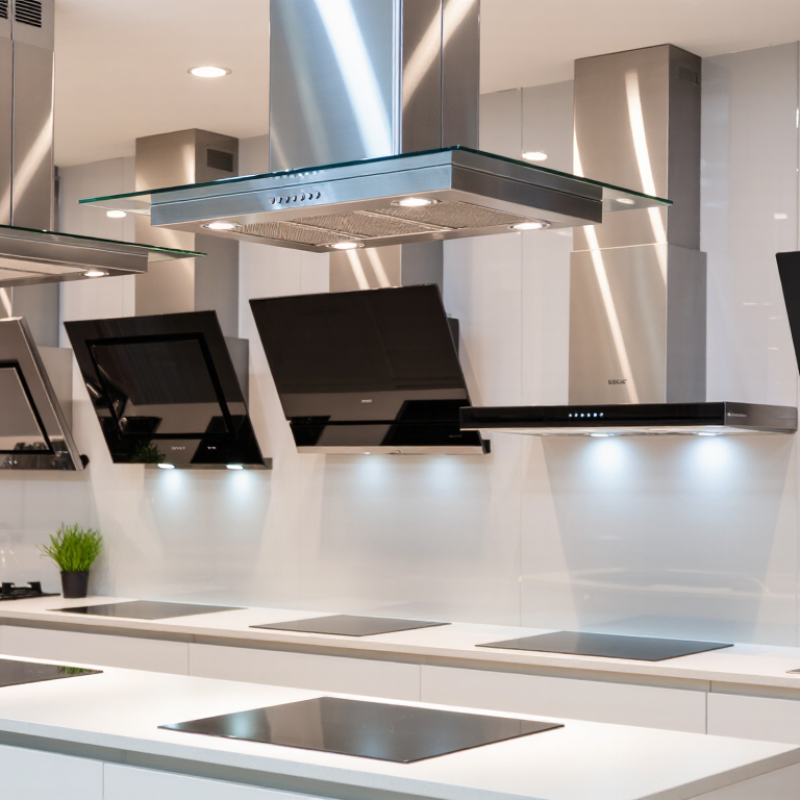
How Range Exhaust Hoods Remove Smoke, Grease, and Cooking Odors
A range hood works best when it catches cooking fumes near the pan, before they spread across the room. Turn it on a few minutes before cooking, especially when searing meat or frying onions. The rising plume carries tiny grease droplets, smoke, moisture, and odor molecules toward the hood’s intake. Placement matters: a hood mounted too high may miss more of that plume. Even a powerful fan cannot capture everything.
Inside the hood, metal mesh or baffle filters trap much of the airborne grease. These filters need regular cleaning; a sticky surface can restrict airflow and collect dust. Ducted models move captured air outdoors, while recirculating models pass it through filters and return it to the kitchen. Many use activated carbon to reduce odors, but carbon filters do not remove every smell. Check the care instructions, since replacement intervals vary.
Listen and look. If steam drifts past the hood or smoke lingers near the ceiling, the fan setting, hood size, or cooking position may need attention. Open a nearby window only if it does not disrupt the hood’s airflow. Keep the fan running briefly after cooking, then inspect the filters. It is easy to forget. A quieter setting may feel pleasant, but it may not capture a vigorous frying plume as well.
10 Best Range Exhaust Hoods for Your Kitchen — How Range Exhaust Hoods Remove Smoke, Grease, and Cooking Odors
Compare ten common range-hood styles by installation, typical airflow, filtration, and ideal use. Performance varies by model, duct layout, installation, and cooking habits; airflow and noise figures below are general ranges, not specifications for a particular product.
| Range Hood Type | Typical Airflow | Typical Noise | How It Handles Smoke, Grease, and Odors | Common Widths | Best Suited For | Key Consideration |
|---|---|---|---|---|---|---|
| Under-Cabinet, Ducted | About 200–600 CFM | Often around 2–7 sones, depending on speed | Grease filters capture airborne grease; a duct carries smoke, heat, moisture, and cooking odors outdoors. | Commonly 30 or 36 in. | Everyday cooking in kitchens with an exterior duct route. | Check cabinet clearance and duct size; long or narrow duct runs can reduce airflow. |
| Under-Cabinet, Recirculating | About 100–300 CFM | Often around 2–6 sones | A grease filter captures particles, while an activated-carbon filter can reduce some odors before air returns to the room. | Commonly 30 or 36 in. | Apartments or kitchens where exterior venting is unavailable. | Does not exhaust heat or moisture outdoors; carbon filters need periodic replacement. |
| Wall-Mount Chimney Hood | About 300–900 CFM | Often around 2–8 sones | Grease filters collect grease, and ducted models exhaust smoke and odors outside. | Commonly 30, 36, or 42 in. | Kitchens with a range against an open wall and room for a visible hood. | Confirm the hood is at the manufacturer’s recommended height above the cooking surface. |
| Island-Mount Hood | About 400–1,000 CFM | Often around 3–9 sones | A canopy collects rising cooking emissions; ducted versions discharge them outdoors through the ceiling. | Commonly 36 or 42 in. | Ranges located in a kitchen island or peninsula. | Air can disperse around an island, so proper sizing and placement are especially important. |
| Insert or Built-In Hood | About 300–900 CFM | Varies by liner and blower; often around 2–8 sones | Installed inside a custom enclosure, it filters grease and, when ducted, moves smoke and odors outdoors. | Selected to match the enclosure, often 30–48 in. | Custom cabinetry and kitchens seeking a concealed hood appearance. | The insert, enclosure, and blower must be compatible and sized for the cooking area. |
| Downdraft Vent | About 300–600 CFM | Often around 3–8 sones | Draws cooking emissions downward or sideways into filters and a duct; recirculating versions may use additional odor filtration. | Usually matched to the cooktop or range | Island layouts or designs where an overhead hood is not wanted. | Because smoke naturally rises, capture can be less effective for tall pots and high-heat cooking. |
| Microwave-Hood Combination | About 200–400 CFM | Varies by fan speed; often around 2–7 sones | Grease filters capture particles; air is either ducted outdoors or filtered and returned to the kitchen. | Commonly 30 in. | Compact kitchens needing both a microwave and a cooking ventilation solution. | Capture area and airflow may be more limited than those of a dedicated full-size hood. |
| Outdoor-Grill Hood | About 600–1,200+ CFM | Varies widely; higher airflow can be louder | A large canopy and grease filtration collect heavier smoke and grease; ducted systems exhaust them outside. | Often 36–60 in. or wider | Outdoor kitchens and grill stations designed for substantial cooking emissions. | Choose equipment rated for the installation environment and follow local fire and building requirements. |
| Remote-Blower Hood System | About 400–1,200+ CFM | Often quieter at the hood; total system noise still depends on airflow and ductwork | A remote blower moves air through a duct; hood filters capture grease before the air is exhausted outdoors. | Depends on the hood canopy, commonly 30–48 in. | Kitchens where reducing motor noise near the cooking area is a priority. | Requires a compatible remote blower, suitable ductwork, and access for maintenance. |
| High-Capture Professional-Style Hood | About 600–1,200+ CFM | Often around 4–10 sones at higher speeds | A deeper canopy and grease filters help capture emissions from frequent high-heat cooking; ducted models vent outdoors. | Commonly 36–60 in. | Large ranges, frequent searing, or kitchens with demanding cooking needs. | High airflow may require make-up air and should be checked against local codes and the home’s ventilation setup. |
How range hoods work: A hood draws cooking emissions into grease filters. Ducted systems carry filtered air outdoors, helping remove smoke, odors, heat, and moisture. Recirculating systems return air to the kitchen after filtration; they can reduce grease and some odors but do not remove heat or moisture from the room. For effective capture, use the hood while cooking and leave it running briefly afterward.