
Choosing the best Battery Server Rack from China requires more than comparing prices or advertised capacity. A reliable rack must support stable power, safe installation, efficient cooling, and long service life. This article examines how Chinese manufacturers design and test these systems for data centers, telecommunications rooms, factories, and renewable energy projects.
The evaluation focuses on practical details. These include lithium iron phosphate cells, battery management systems, cabinet dimensions, communication protocols, and thermal protection. A quality rack should provide clear voltage readings, accurate state-of-charge data, and dependable alarms. It should also support common interfaces, such as CAN, RS485, or Ethernet. Certifications and test reports matter too. Buyers should verify documents, rather than trust product images alone.
Price remains important, but it cannot replace traceability. Check the cell supplier, production records, warranty terms, and after-sales response time. Ask whether the manufacturer performs capacity testing on every battery module. Some suppliers offer impressive specifications but provide limited technical support after shipment. That weakness deserves attention. Real projects also reveal unexpected issues, including installation space, cable routing, and regional service delays. The best choice depends on your load profile, backup duration, climate, and expansion plan. No single Chinese model fits every site. Careful comparison creates a safer decision, even when the available information feels incomplete.
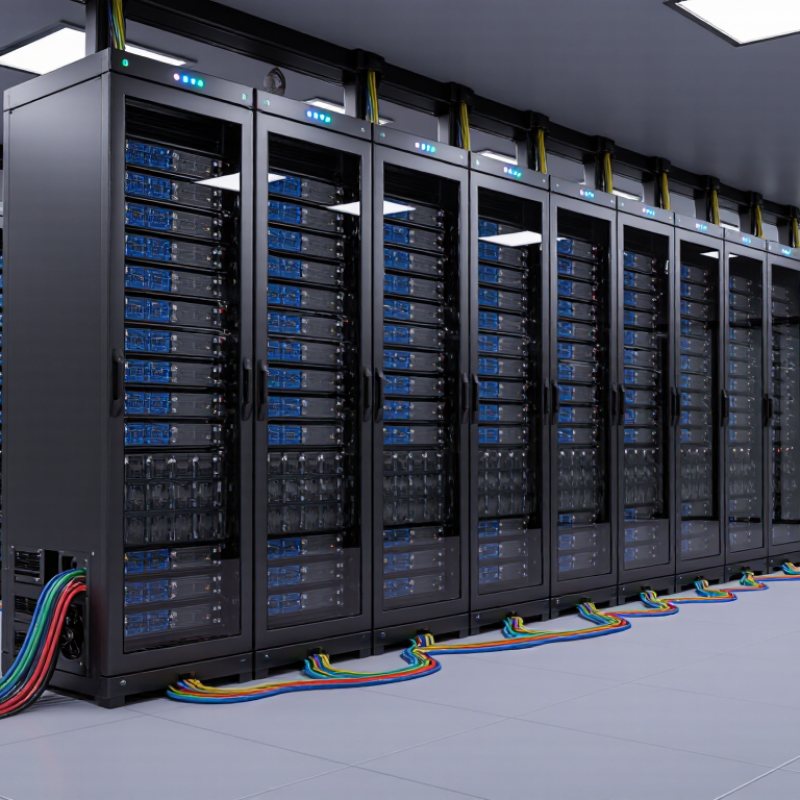
A battery server rack is a cabinet filled with rechargeable battery modules, a battery management system, and protection equipment. It stores energy as direct current and supplies servers through an uninterruptible power system or power conversion system. During normal operation, the rack charges from the utility supply. When voltage drops, it switches within milliseconds and keeps critical servers running.
Lithium iron phosphate cells are common because they offer strong thermal stability and long cycle life. The management system measures voltage, current, temperature, and state of charge. It can isolate a faulty module before damage spreads. Rack-level airflow, fire detection, and safe electrical isolation are equally important. Small details matter. A loose busbar can create dangerous heat.
The International Energy Agency reported that data centers used about 460 TWh of electricity globally in 2022, with demand potentially exceeding 1,000 TWh by 2026. This growth increases pressure on backup systems and operating costs. BloombergNEF reported a global lithium-ion battery pack price of about 115 US dollars per kWh in 2024, although server-grade systems cost more after controls and safety equipment. Chinese manufacturing can offer flexible configurations and competitive pricing, but the lowest quote is not automatically the best choice. Buyers should verify capacity tests, warranty conditions, IEC compliance, thermal records, and local service capability. One weakness is often overlooked: battery aging is not perfectly predictable, especially in hot rooms.
Typical Battery Server Rack Configurations and Usable Energy
A battery server rack stores electrical energy in modular battery packs and supplies DC power to an inverter, UPS, or energy storage system. Usable energy is estimated at 90% of nominal energy, calculated as voltage × amp-hours × 0.9. The best configuration depends on required backup duration, voltage compatibility, available rack space, safety requirements, and scalability.
Chinese server racks commonly use lithium iron phosphate batteries for backup power. Their stable chemistry, long cycle life, and lower thermal risk suit data rooms. A typical rack may contain modular battery packs, a battery management system, contactors, fuses, and temperature sensors. The BMS checks cell voltage and temperature continuously. It also balances cells during charging.
Lithium nickel manganese cobalt batteries appear in some compact systems. They offer high energy density but require stricter thermal control. Traditional valve-regulated lead-acid batteries remain relevant for lower-cost installations. They are familiar, recyclable through regulated channels, and simple to replace. However, they occupy more space and usually need more frequent maintenance.
Sodium-ion technology is also entering early commercial testing. It may perform well in colder environments, but long-term rack data is still limited. No chemistry is perfect. Engineers must compare load profiles, room temperature, service access, and expected backup duration.
In real assessments, a smaller lithium pack can outperform a larger battery when monitoring is poor. That detail is easy to miss. Safety certifications, documented test results, and transparent warranty terms matter more than impressive capacity figures. Each server rack should also include ventilation planning, alarm integration, and clear isolation procedures. Yet even careful designs can develop weak cells, so periodic inspection remains necessary.
What Is the Best Battery Server Rack from China?
How to Evaluate China-Made Battery Server Rack Performance
Evaluating a China-made battery server rack requires more than checking its price or appearance. Begin with the electrical design. Confirm the rated voltage, continuous current, short-circuit protection, and compatibility with the battery management system. A 48-volt rack should maintain stable output during charging and sudden load changes. Request test records, wiring diagrams, and inspection dates.
Mechanical details reveal practical quality. Inspect the frame for even welds, rigid mounting rails, and smooth cable openings. A loaded cabinet should not twist when modules slide into place. Measure airflow around the batteries, especially near the top shelf. Heat often gathers there. Sensors should record temperature at several points, not only near the controller.
Safety documentation must match the intended market and installation environment. Check insulation testing, grounding continuity, fire response design, and relevant certification evidence. Ask how the rack performed after repeated charge and discharge cycles. A single factory demonstration proves little. Also inspect packaging, because bent rails or crushed corners can appear after transport.
The first inspection is rarely enough. In one practical review, cable length looked adequate until maintenance access was tested. That small oversight delayed service work. I would also question unclear test data, even when the cabinet looks excellent. Performance is measurable, but installation habits still affect reliability.
| Evaluation Dimension | Recommended Technical Benchmark | Typical Data for a Qualified Rack-Mounted Battery System | How to Verify Performance | Evaluation Weight |
|---|---|---|---|---|
| Battery Chemistry | Lithium iron phosphate (LiFePO4) for stationary energy storage | Non-cobalt lithium chemistry with high thermal stability and suitable cycle-life characteristics | Review the cell datasheet, bill of materials, safety documentation, and third-party test records | 8% |
| Nominal Voltage | 48 V or 51.2 V DC architecture for common low-voltage server-rack systems | 51.2 V nominal voltage, normally configured with sixteen 3.2 V LiFePO4 cells in series | Confirm the series-cell configuration, voltage limits, and inverter compatibility | 7% |
| Usable Energy | At least 90% of rated energy under the specified discharge conditions | A 5.12 kWh rated rack commonly provides approximately 4.61 kWh or more of usable energy at 90% depth of discharge | Check the capacity test report at the stated temperature, current, end-of-discharge voltage, and state-of-charge limits | 8% |
| Continuous Discharge Power | Power output should match the battery capacity and inverter requirements without excessive heating | For a 5.12 kWh, 51.2 V rack, 100 A continuous discharge is approximately 5.12 kW before system losses | Compare the continuous-current rating with the inverter input current and perform a full-load thermal test | 10% |
| Peak Discharge Capability | Short-duration peak current should be clearly defined rather than presented as a continuous rating | Typical systems specify approximately 100–200 A for 1–10 seconds, depending on cell and BMS design | Review the pulse-current specification and confirm the duration, temperature, state of charge, and recovery limits | 5% |
| Round-Trip Efficiency | At least 90% for the battery system under defined test conditions | Well-designed lithium rack systems commonly achieve approximately 92–96% DC round-trip efficiency; inverter efficiency is evaluated separately | Request charge-and-discharge energy measurements at a stated current, temperature, and state-of-charge window | 8% |
| Cycle Life | The test condition must include depth of discharge, temperature, charge rate, discharge rate, and end-of-life criterion | LiFePO4 systems may achieve approximately 3,000–6,000 cycles to 80% retained capacity under controlled conditions | Check the cell-level and pack-level cycle reports; do not compare cycle figures with different test conditions | 12% |
| Battery Management System | Independent monitoring and protection for voltage, current, temperature, state of charge, and state of health | Protection functions should include overcharge, over-discharge, overcurrent, short circuit, overtemperature, undertemperature, and cell balancing | Inspect the BMS protection matrix, alarm records, firmware version, balancing method, and fault-reset procedure | 12% |
| Communication Compatibility | Documented communication protocol with the intended inverter or energy-management system | CAN bus and RS485 are common; protocols should provide state of charge, voltage, current, temperature, alarms, and charge limits | Verify the communication map, connector pinout, baud rate, protocol file, and compatibility test results | 7% |
| Electrical Safety | Protection and construction aligned with applicable stationary battery and power-electronic safety requirements | Evidence may include IEC 62619, IEC 63056, IEC 62477-1, or equivalent test coverage, depending on the market and system design | Request valid test reports showing the exact battery model, configuration, revision, and laboratory information | 10% |
| Transport Safety | Lithium battery transport testing must be completed before international shipment | UN 38.3 test documentation should cover the shipped battery configuration and applicable transport requirements | Check the UN 38.3 test summary, safety data sheet, packaging instructions, and dangerous-goods documents | 5% |
| Ingress Protection | The enclosure rating should match the installation environment | IP20 is common for indoor server rooms; higher ratings are required where dust, water, or condensation may be present | Confirm the IP test evidence and inspect cable glands, covers, ventilation openings, and installation instructions | 4% |
| Operating Temperature | Performance and safety limits must be separately specified for charging and discharging | Typical LiFePO4 systems discharge around −20°C to 55°C and charge around 0°C to 45°C, subject to the manufacturer’s limits | Review the thermal derating curve and confirm whether low-temperature charging protection or heating is provided | 6% |
| Thermal Management | Temperature rise should remain within the cell and enclosure design limits at maximum rated load | Passive cooling is common for moderate-power indoor racks; fans or other thermal controls may be needed for high-current operation | Perform a full-load test while recording cell temperature spread, enclosure temperature, and charging temperature | 8% |
| Mechanical Design | Rack dimensions, mounting method, mass, and service access must fit the target cabinet | Common 19-inch rack systems use approximately 3U–5U of height, with weight often ranging from 45 kg to 65 kg for a 5 kWh-class unit | Verify dimensional drawings, mounting hardware, center of gravity, terminal clearance, and lifting requirements | 5% |
| Quality Consistency | Cells should be traceable, matched, and produced under a controlled quality system | Important records include cell batch numbers, incoming inspection, end-of-line testing, insulation testing, and final capacity testing | Audit production records and request sample test data from multiple production batches | 8% |
| Warranty and Serviceability | Warranty terms should define retained capacity, operating limits, exclusions, and support response | Common commercial terms include 5–10 years or a specified energy-throughput limit, subject to installation and usage conditions | Review the written warranty, spare-parts policy, remote-support capability, firmware process, and replacement procedure | 8% |
Note: Technical values are industry-reference ranges for evaluation purposes. Actual performance must be confirmed against the exact battery model, test conditions, installation environment, and applicable local regulations.
When selecting the best battery server rack from China, safety documentation deserves more attention than price or capacity. Buyers should request the complete battery model, not a certificate for a similar product. Check UN 38.3 test evidence for transport safety, especially vibration, impact, altitude, and thermal cycling. For lithium battery systems, IEC 62619 can indicate industrial safety testing. UL 1973 may also be relevant for stationary battery systems in North American projects.
Do not treat CE marking as a universal safety certificate. It confirms conformity with applicable European requirements, but its value depends on the technical file and responsible manufacturer. Ask for reports from an accredited laboratory, including the tested cell type, module design, firmware version, and production site. The battery management system should provide overcharge, over-discharge, short-circuit, and temperature protection. Ask how the rack isolates a failed module. A clear answer matters.
Fire safety requires deeper checking. Depending on the project, review IEC 62477-1, UL 9540, or UL 9540A evidence, along with local electrical and fire codes. IP ratings should match the installation room, not merely appear on a brochure. During factory audits, inspect cable routing, torque records, warning labels, and emergency shutdown access. A certificate alone can still hide weak quality control. This is an easy mistake. Buyers should also verify warranty exclusions, software update procedures, and whether field service technicians are properly trained.
What Is the Best Battery Server Rack from China?
Choosing the best Chinese battery server rack starts with your actual load, runtime, and installation environment. Measure rack power in kilowatts, not only ampere-hours. A 10 kW load needing 15 minutes requires a different system from a 3 kW load needing two hours. The IEA’s Energy and AI report estimates that data centers used about 415 TWh of electricity in 2024. This rising demand makes efficiency and battery availability increasingly important.
Lithium iron phosphate systems usually offer higher usable capacity and longer cycle life than traditional lead-acid batteries. However, chemistry alone should not decide the purchase. Check the battery management system, cell balancing, thermal sensors, emergency isolation, and communication protocols. Confirm compatibility with your UPS and rack dimensions. Request test records based on recognized safety standards, such as IEC requirements. Uptime Institute research repeatedly identifies power problems as a major cause of data-center outages, so monitoring cannot be treated as an optional feature.
A practical supplier evaluation should include factory audits, serial-number traceability, cycle-test evidence, warranty terms, and local service response times. Ask for measured round-trip efficiency at your expected load. Sales figures can look impressive. They are not proof of field reliability. I would also compare total cost over ten years, including replacement modules, cooling, transport, and disposal. A lower purchase price may mislead me. That weakness deserves review. Pilot one rack first, record temperature and voltage behavior, then expand only after the data supports the decision.
